
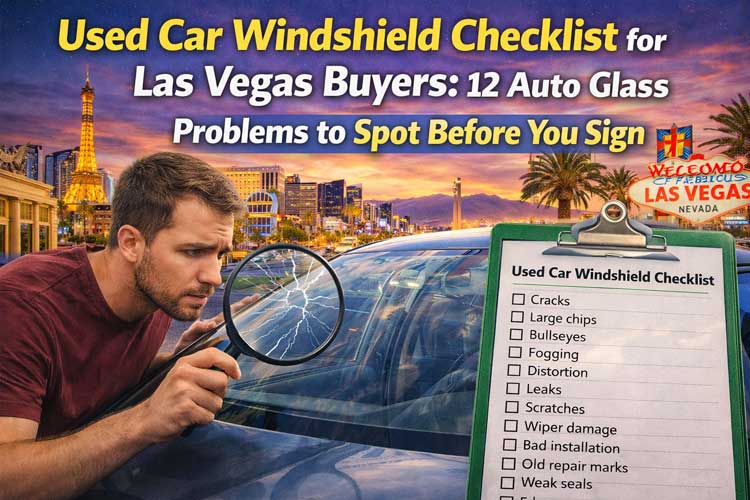
Used Car Windshield Checklist for Las Vegas Buyers: 12 Auto Glass Problems to Spot Before You Sign. Buying a used car in Las Vegas can feel like a great deal right up until the first sunrise hits the windshield and you realize you also bought someone else’s glass problems.
Used Car Windshield Checklist for Las Vegas Buyers
That happens here more than people expect. Las Vegas is known for abundant sunshine and triple-digit summer heat, and that kind of climate is brutal on windshields, window seals, and power windows. A tiny chip, dried-out molding, or sloppy old glass job can look minor on the lot and become a real headache a week later.
At Power Window Repair Las Vegas, we’ve been serving local drivers for over 30 years, with 4 locations in Las Vegas, affordable pricing, and great quality work. We truly pride ourselves with excellence on auto glass repairs, and that includes helping buyers spot trouble before they sign on the dotted line.
Why used car buyers in Las Vegas should care about auto glass
A windshield is not just there to block wind. On many newer used cars, it also works with safety tech like lane-departure warning, lane-keeping assistance, and forward-collision systems. NHTSA notes that these driver-assistance technologies can help reduce crashes, and some lane-related systems rely on camera-based vision through the windshield.
That means a bad windshield replacement, a camera bracket problem, or even distortion in the glass can be more than cosmetic. It can affect how the vehicle feels, how clearly you see, and in some cases how its safety features behave.
A quick lot check before the test drive
Before you fall in love with the paint, do this first:
Park where you can look at the car in both shade and direct sun. Stand outside and scan the windshield from a few angles. Then sit in the driver’s seat and look through the glass the way you actually would on your commute. After that, run every window up and down, and listen for anything that sounds off.
That five-minute routine catches a lot.
The 12-point checklist
1. Fresh rock chips
Start with the obvious. Look for small bullseyes, stars, or impact marks anywhere in the windshield.
A seller may call it “just a tiny chip,” but in Las Vegas heat, tiny chips do not always stay tiny. If you want to understand how fast that can get expensive here, this related post is worth reading: The Hidden Cost of Ignoring Minor Chips in Las Vegas Sunshine.
2. Cracks that reach the edge
A short crack in the middle of the glass is one thing. A crack that reaches the outer edge is a bigger red flag.
Edge cracks usually spread faster, and they often mean the glass is already under serious stress. If you see one, treat it as a likely replacement issue, not a casual “maybe later” repair.
3. Sand pitting and hazy “desert wear”
This one fools a lot of buyers.
The windshield may look okay from straight on, but when the sun hits it at an angle, it starts to sparkle, haze, or look slightly frosted. That is often years of desert sand, freeway grit, and wiper wear.
If the used car has spent its life around the valley, that is not unusual. Our post on How Highways & Freeway Debris in Henderson Can Impact Your Windshield explains why Southern Nevada roads are especially rough on glass.
4. Wiper scratches in the driver’s line of sight
Look for arc-shaped wipe marks across the glass, especially on the driver’s side.
Old blades plus dry dust can leave fine scratches that are easy to miss on the lot and miserable at sunrise, sunset, or night. If you see a lot of scratching where the blades travel, assume visibility will feel worse in real-world driving than it does in a calm parking lot.
5. Milky edges or delamination
Check the outer perimeter of the windshield carefully.
If you see white, cloudy, or milky areas between the layers of glass, that can be a sign of delamination. It is not something most sellers advertise, but it is exactly the kind of detail that makes a used car feel older and rougher than its mileage suggests.
6. Uneven molding or signs of a bad old replacement
A replaced windshield is not automatically bad news. Plenty of good cars have had windshield work done.
What matters is whether it was done well. Watch for loose molding, extra adhesive, trim that sits unevenly, or glass that looks slightly off-center. Those details can point to rushed workmanship, and rushed workmanship is the last thing you want on a used vehicle.
7. Wind noise clues and water-leak evidence
Open the doors and smell the cabin. Look at the headliner corners and A-pillars. Then, on the test drive, listen for whistling or buzzing around the windshield at speed.
Musty smells, water stains, or unusual wind noise can point to seal problems or a poor prior install. Those issues rarely get better on their own.
8. Chips or cracks near the mirror and camera area
Pay close attention to the area behind the rearview mirror.
If the car has lane-departure warning, lane-centering, automatic braking, or other modern driver-assistance features, NHTSA says some of those systems rely on windshield-facing cameras. A used car with a chip, crack, sloppy bracket area, or warning light near that part of the glass deserves extra caution.
If you are shopping newer used EVs or late-model cars with more advanced glass tech, this guide may help too: Electric Vehicle Windshields in Las Vegas: Special Auto Glass Considerations for Teslas and Other EVs.
9. Optical distortion or waviness
Pick a straight object in the distance—a light pole, building edge, or signpost—and look through different parts of the windshield.
If that straight line bends, doubles, or looks wavy through one section of the glass, do not ignore it. That kind of distortion gets old very quickly on a daily commute.
10. Mismatched side glass
Check the logos and tint tone on the side windows.
If one door glass panel looks different from the others, ask why. Sometimes the answer is harmless, like an old break-in. Sometimes it hints at collision damage, poor-quality replacement glass, or a side window job that was done cheaply.
11. Slow, crooked, or sticking power windows
Run every power window all the way down and all the way back up.
If a window tilts, hesitates, clicks, or struggles near the top, that is worth noting. Used car buyers often focus on the windshield and miss the fact that one bad regulator or failing motor can become a same-month repair bill.
If you want to know what those symptoms usually mean, read 5 Signs Your Power Window Motor Is Failing.
12. Rear glass damage and dead defroster lines
Do not stop at the windshield.
Check the rear glass for corner cracks, chips, sloppy tint damage, and broken defroster lines. On hatchbacks, SUVs, and family cars, rear glass problems can quietly hurt visibility, comfort, and resale value later on.
Two free checks smart buyers should always do
If you are buying from a dealer, the FTC’s Used Car Rule requires a Buyers Guide on used cars offered for sale. The FTC says that guide tells you whether the vehicle is being sold as-is or with a warranty, and it also tells buyers to ask to have the car inspected by an independent mechanic before purchase.
Then run the VIN through the official NHTSA recall lookup. NHTSA says you can find the VIN on the lower left of the windshield, and the recall search will show whether that specific vehicle has unrepaired recalls.
What should make you negotiate—and what should make you walk away?
A small chip away from your line of sight, one slow side window, or light wiper scratching is usually a negotiation issue. Ask for a price adjustment, ask the seller to fix it, or at least factor the repair into your budget before signing.
A long edge crack, visible water-leak evidence, serious distortion, a loose camera area, or multiple glass problems on the same car deserve a lot more caution. Those are the issues that can turn a bargain into an expensive mistake.
If you do buy the car and later need help figuring out coverage, our post on Understanding Auto Glass Insurance Claims in Nevada is a useful follow-up.
Why buyers trust Power Window Repair Las Vegas
Used car buyers usually want the same thing: a straight answer.
Is the windshield fine? Is it repairable? Is the side glass a minor issue, or is it the beginning of a bigger repair bill?
That is where Power Window Repair Las Vegas comes in. With over 30 years of experience, 4 Las Vegas locations, affordable pricing, and great quality work, we help buyers and owners get honest answers without pressure. We truly pride ourselves with excellence on auto glass repairs, whether that means a chip repair, a windshield replacement, or finally fixing the power window the seller forgot to mention.
Final takeaway
A used car’s glass tells you a lot before a mechanic ever puts it on a lift.
It can reveal neglect, heat damage, poor previous repairs, hidden leak problems, and even tech issues around newer driver-assistance systems. So before you sign, slow down and check the glass like it matters—because it does.
Look through the windshield in real light. Run every window. Check the edges, seals, and rear glass. Read the Buyers Guide. Run the VIN.
That extra five minutes can save you real money—and a lot of regret—once the Las Vegas sun starts doing what it always does.