
OPEN 24/7 FOR CALLS & QUOTE REQUESTS • THREE LAS VEGAS SHOPS

Month: December 2025

  • Convertible Top Glass & Rear Window Repair: Special Considerations for Summer

    Convertible Top Glass & Rear Window Repair: Special Considerations for Summer

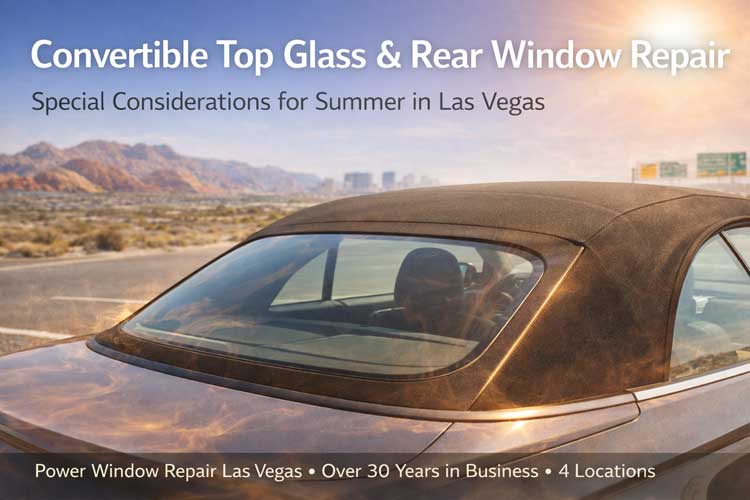
    Convertible Top Glass & Rear Window Repair: Special Considerations for Summer. Dropping the top in a Las Vegas summer feels amazing—right up until the sun, heat, and dust start attacking your convertible top glass and rear window from every angle.

    At Power Window Repair Las Vegas, we’ve been working on auto glass in the valley for over 30 years, with 4 convenient locations across Las Vegas. We’re known for affordable pricing, great quality work, and we genuinely pride ourselves with excellence on auto glass repairs—including convertible top glass and rear windows that need extra care in the summer months.

    This guide walks you through what makes convertible rear glass different, how Vegas heat speeds up damage, and what you can do to protect your car (and your wallet).


    Why Convertible Top Glass & Rear Windows Are Different

    Convertible rear glass isn’t just a regular back window bolted into a metal frame.

    On most convertibles, the rear glass is bonded to fabric or vinyl, then integrated into a flexible top that has to move, fold, and seal repeatedly. That creates a few unique challenges:

    • The bond between the glass and the soft top material is a major failure point over time. Many convertible top manufacturers note that rear window bond separation is the number one issue they see on soft tops, especially as the material ages and shrinks. 
    • The glass often includes defroster lines and wiring, which can be damaged by movement, moisture, or DIY repairs. 
    • Everything is constantly flexing—every time you raise or lower the top, the fabric and bond line are put under tension. 

    Add Las Vegas summer heat to that mix, and problems can show up much earlier than they would in a mild climate.

    If you want a deeper look at how rear glass affects safety and value in general, you can also check out

    👉 The Role of Rear Window Glass in Your Car’s Safety & Resale Value


    How Las Vegas Summer Heat Attacks Convertible Rear Glass

    1. Extreme Temperatures on the Top & Glass

    Your convertible doesn’t just sit in “hot” weather—it bakes.

    • Safety agencies have shown that the inside of a car can climb above 110°F even when outside temps are only in the 60s, and far higher when it’s truly hot. 
    • Convertible top specialists have measured soft tops and rear glass heating to around 80–90°C (176–194°F) in direct sun, which is near or beyond what many general-purpose adhesives can reliably handle long-term. 

    That kind of heat does a few things:

    • Accelerates aging of the adhesive that bonds the glass to the top
    • Dries out rubber seals around the rear window
    • Makes any existing weak spots spread faster once summer hits

    2. UV Exposure on Fabric, Vinyl & Adhesives

    The Las Vegas sun blasts your convertible top with intense UV every day.

    • Convertible care guides consistently recommend UV-protectant products for both fabric and vinyl tops specifically to slow fading, drying, and cracking. 
    • Without protection, the fabric shrinks and stiffens, which pulls on the window bond and can cause that familiar “gap at the top of the glass” look. 

    When the top shrinks but the glass doesn’t, the adhesive or heat-bonded seam is what gets stressed.

    3. Thermal Cycling: Up, Down, and Everything in Between

    A typical Las Vegas convertible day:

    • Parked in full sun at work
    • Cabin and top heat up dramatically
    • You start the car, blast max A/C, and maybe drop the top while everything is still roasting

    That constant cycle of expansion and contraction—combined with folding and moving the top—puts real stress on:

    • The bond line between glass and fabric/vinyl
    • The perimeter seals around the rear window
    • The defroster connections and wiring

    Over time, that stress shows up as separation, leaks, and cracking.

    4. Dust, Wind & Surprise Monsoon Storms

    Las Vegas and Henderson also bring:

    • Fine desert dust that works its way into seams and seals
    • Occasional strong winds and sudden monsoon downpours

    Dust acts like sandpaper on flexible seals and stitching, while sudden cold rain hitting a super-heated top can highlight or worsen existing weak spots. 

    For more on how storms affect auto glass seals in general, see

    👉 How Desert Storms in Southern Nevada Can Compromise Your Auto Glass Seal


    Common Summer Problems with Convertible Top Glass & Rear Windows

    Here’s what we see a lot of when summer hits:

    • Glass pulling away from the fabric or vinyl
      • A gap starts along the top or sides of the rear window
      • You may see daylight or feel air movement around the edges
    • Water leaks into the trunk or back seat
      • Damp carpet, musty smells, or water spots after monsoon rain or a car wash
    • Fogging or haze around the bond line
      • Moisture creeping between the glass and top material
    • Cracks or chips in the rear glass
      • Sometimes from road debris, sometimes from stress as the bond weakens
    • Defroster or electrical issues
      • Only part of the defroster works
      • Corrosion around connectors from repeated moisture intrusion
    • Cosmetic damage that becomes structural
      • Discolored or cracked vinyl/fabric around the window
      • Stitching or seams failing near the glass

    If any of that sounds familiar, it’s worth acting sooner rather than later—especially before another Vegas summer of 110°+ days.


    Summer Care Tips for Convertible Top Glass & Rear Windows

    1. Park & Position Smart

    You can’t avoid the sun completely, but you can make life easier on your top:

    • Use covered parking, garages, or carports whenever possible
    • If you have to park outside, use a good-quality sunshade and try to avoid long-term parking with the rear glass pointed directly at the afternoon sun
    • Don’t leave the top partially latched—either fully up and locked or fully down (when safe) to avoid uneven stress

    2. Clean the Rear Window Correctly

    Convertible guides recommend treating rear windows differently depending on whether they’re glass vs. plastic/vinyl

    • For glass rear windows (what most newer convertibles have):
      • Use an ammonia‑free glass cleaner and soft microfiber towel
      • Wipe gently, especially around defroster lines
    • For older plastic/vinyl rear windows:
      • Use a plastic-safe cleaner and polish made for convertible windows
      • Never dry wipe dusty plastic—it scratches easily

    And try not to let cleaners drip onto the fabric or vinyl top unless the product is designed for it.

    3. Condition the Top & Seals

    A little routine care goes a long way:

    • Clean the soft top with a convertible-safe cleaner and follow with a UV-protectant or fabric/vinyl protectant as recommended by the product maker 
    • Gently clean rubber seals around the rear window and treat them with a rubber-safe conditioner (not petroleum grease)
    • Avoid strong solvents or cheap “shiny” dressings that can actually dry out rubber and stitching over time

    If you want more general rear-glass care advice in hot weather, our guide

    👉 How to Maintain Rear Windshields and Back Glass Trim in Hot Climates

    goes into detail on trim, seals, and cleaning.

    4. Use the Top Thoughtfully

    Convertible experts often suggest:

    • Don’t operate the top when it’s soaking wet—you can trap moisture and encourage mildew or corrosion 
    • Avoid lowering the top if the rear window or fabric feels stiff from cold (more of a winter issue, but good to know for night driving or trips to cooler areas)
    • Raise and lower the top fully and smoothly instead of stopping halfway and leaving tension on the back glass

    Why DIY Glue Fixes Usually Don’t Last in Vegas Heat

    When the glass starts to pull away from the top, it’s tempting to reach for:

    • Hardware‑store adhesive
    • Generic “window glue”
    • Double-sided tape
    • Random online kits

    The problem? Most of those products aren’t truly rated for the temperature extremes a black convertible top and rear glass see in direct desert sun. Convertible specialists who test adhesives for rebonding rear glass have found many off-the-shelf products start to fail once surfaces climb into the 80–90°C range, which is entirely possible in summer sun. 

    Short-term, you might stop a draft. Long-term, you often end up with:

    • A dirtier, more difficult-to-clean bond area
    • Stained fabric or vinyl
    • A repair that fails again the next summer—this time worse

    That’s why many high-end convertible top manufacturers moved to specialized, high-strength bond systems with internal rings and engineered adhesives designed specifically to avoid window separation. 

    If your glass is already separating, it’s usually smarter (and ultimately cheaper) to let a shop familiar with convertible tops and auto glass handle it.

    For small glass chips or cracks that aren’t in the bond area, our article

    👉 Using Glass Repair Kits Safe in Las Vegas: What Works and What Doesn’t

    explains when a kit is okay and when it’s better to let us handle it—especially in extreme heat.


    How Power Window Repair Las Vegas Handles Convertible Top Glass & Rear Windows

    Convertible glass work is more than just “sticking a new window in.” Here’s how we approach it at Power Window Repair Las Vegas:

    1. Detailed Summer-Focused Inspection

    We look at:

    • How far the glass has separated from the top
    • Condition of the fabric/vinyl, stitching, and seals
    • Whether the issue is isolated or part of overall top shrinkage
    • Any leaks into the trunk or cabin, and any electrical concerns with the defroster

    2. Honest Repair vs. Replacement Advice

    Depending on what we see, we’ll explain whether:

    • A targeted rebond or reseal is realistic
    • The top is at the point where replacement is the better long-term move
    • You’re also due for other rear glass or seal work that can be combined to save labor

    We keep pricing straightforward and affordable, so you’re not surprised halfway through.

    3. Using Materials Meant for Heat & Movement

    Our techs use automotive-grade adhesives and sealants built to handle vehicle movement and desert heat—not just household glue. We follow proper prep steps so the adhesive sticks to clean, properly prepared surfaces.

    Because we’re an auto glass and power window specialist, we also make sure:

    • Rear defroster connections are protected and working
    • Any interior trim we remove goes back the right way—no rattles or half-clipped panels

    4. Convenience Across the Valley

    With 4 locations in Las Vegas plus mobile service for many jobs, it’s easy to work convertible top glass repair into a busy schedule. Over 30+ years in the valley, we’ve helped thousands of drivers keep their cars usable and good-looking in tough conditions.

    We don’t just say we do good work—we pride ourselves with excellence on auto glass repairs, and it shows in how many customers come back every time they buy a new car.


    When Insurance Might Help with Convertible Glass Damage

    If a rock, vandalism, or storm damage is to blame for your convertible’s rear glass issues, your comprehensive insurance may help with repair or replacement.

    To get a feel for what coverage looks like in Nevada, you can read:

    👉 Understanding Auto Glass Insurance Claims in Nevada

    We work with many insurers every day and can help:

    • Confirm whether repair vs. replacement is covered
    • Keep the process simple so you’re not chasing paperwork
    • Make sure the work meets safety standards and looks right

    Other Helpful Reads for Summer in Las Vegas

    If you drive a convertible or just want your glass to hold up in the heat, these articles on our site pair well with this one:


    Ready to Get Your Convertible’s Rear Glass Checked?

    If your convertible top glass or rear window is:

    • Pulling away from the fabric or vinyl
    • Leaking, fogging, or whistling
    • Cracked, chipped, or just looking rough

    …it’s a great time to let us take a look before summer makes it worse.

    👉 Visit us at Power Window Repair Las Vegas to schedule an appointment or request a callback.

    With affordable pricing, great quality work, over 30 years in business, and 4 locations in Las Vegas, we’ll help your convertible stay fun to drive—without ignoring the glass and rear window that keep everything sealed, safe, and looking sharp.

  • The Impact of Direct Sunlight on Auto Glass Adhesive Longevity in Las Vegas Heat

    The Impact of Direct Sunlight on Auto Glass Adhesive Longevity in Las Vegas Heat

    The Impact of Direct Sunlight on Auto Glass Adhesive Longevity in Las Vegas Heat. If you live in Las Vegas, you already know what the desert sun can do to your skin, your dashboard, and even your steering wheel. But there’s one thing most drivers don’t think about until there’s a problem:

    👉 How direct sunlight and extreme heat affect the auto glass adhesive that holds your windshield in place.

    At Power Window Repair Las Vegas, we’ve been working on auto glass and power windows in the valley for over 30 years, with 4 convenient locations across Las Vegas. We pride ourselves on affordable pricing, great quality work, and excellence on auto glass repairs—and that includes making sure the adhesive behind your glass is doing its job.

    This article breaks down how direct sunlight affects auto glass adhesive longevity in Las Vegas heat—and what you can actually do about it.


    Why Auto Glass Adhesive Matters More Than You Think

    Modern windshields aren’t just “sitting” in the frame—they’re bonded to the body with a high-strength urethane adhesive. That adhesive:

    • Helps your windshield stay in place during a collision
    • Supports roof strength in a rollover
    • Keeps airbags working correctly by giving them a solid surface to push against

    Because of that, windshield retention is regulated under Federal Motor Vehicle Safety Standard (FMVSS) 212, which sets requirements for how well the glass must stay bonded in a crash. 

    In other words:

    A good-looking windshield with a weak adhesive bond is a safety problem, even if there are no cracks in the glass.


    What Direct Sunlight Really Does to Auto Glass Adhesive in Las Vegas

    Las Vegas is a perfect storm for auto glass adhesive: direct sun, high ambient temps, hot metal, and big swings between daytime and nighttime temperatures. Let’s zoom in on what’s happening at the bond line.

    1. UV Rays: Slow, Quiet Damage Over Time

    The same ultraviolet (UV) rays that fade your paint and crack your dashboard can slowly affect sealants and adhesives at the surface:

    • Studies on sealants show that UV exposure can cause discoloration, surface cracking, blistering, and loss of strength over time. 
    • Technical guidance from polyurethane manufacturers notes that standard polyurethane sealants can show fine surface cracks and degradation after long-term UV exposure, unless they’re specially formulated to be UV-resistant. 
    • Many auto glass urethanes are formulated with UV-resistant additives, but even then, the industry still emphasizes shielding the bond from direct sunlight as much as possible. 

    In a place like Las Vegas—where your car can sit in open sun for hours—this long-term UV exposure can shorten the effective lifespan of the adhesive, especially around edges where the bead is more exposed.

    2. Desert Heat: Extreme Temperatures at the Bond Line

    Direct sunlight doesn’t just warm your car—it bakes it.

    • Research on parked cars shows cabin temperatures can reach 140°F+ (60°C+) when a vehicle is left in direct sun, even when the outside air is cooler. 
    • Auto glass industry guidelines warn that when the sun is hitting the glass and metal frame directly, the pinchweld (metal frame) and urethane bead can heat well beyond ambient temperature. This can lead to “gassing” in the urethane and bonding issues if installation isn’t managed carefully. 
    • Manufacturer data sheets often instruct technicians to store urethane between roughly 50–77°F and keep it away from direct sunlight and other heat sources to preserve performance. 

    Even after the adhesive is fully cured, repeated exposure to those high temperatures speeds up aging: the adhesive becomes less elastic, more brittle at the edges, and more likely to lose grip if another factor (like rust, body flex, or an impact) comes into play.

    3. Thermal Cycling: Expand, Contract, Repeat

    A typical Las Vegas day might look like:

    • Parked in the sun at work all day
    • Blasted with ice-cold A/C on the drive home
    • Parked outside in cooler desert night air

    Glass, metal, and adhesive all expand and contract at different rates when heated and cooled. Over thousands of cycles, this can:

    • Stress the adhesive bond
    • Create micro-gaps along the edges
    • Make it easier for moisture, dust, or road salt (when you travel to colder climates) to sneak in and attack the bond line from within 

    That’s why Las Vegas drivers sometimes see wind noise, leaks, or stress cracks around the perimeter of the windshield years after a replacement—especially if the install wasn’t done with heat in mind.


    Signs the Sun and Heat May Be Affecting Your Windshield Adhesive

    You usually can’t see the adhesive clearly, but you can pick up clues that something isn’t right:

    • New wind noise around the windshield at highway speeds
    • Water spots or damp headliner near the top corners after a storm or car wash
    • Musty smells or fogging inside the vehicle that never quite goes away
    • Visible gaps or uneven spacing between the glass and body trim
    • A chalky, brittle, or crumbling look to the black band or seal area at the edges
    • Chips or cracks spreading unusually fast from the edge of the windshield

    If you’re noticing edge damage or leaks, it’s smart to get it checked—especially in Las Vegas, where a small issue can escalate quickly in the heat.

    For more help spotting risky glass issues, you might also like our post on Top 5 Signs Your Car Needs Power Window Repair, since window and regulator problems often show up alongside seal and glass concerns.


    How Las Vegas Drivers Can Protect Auto Glass Adhesive Longevity

    The good news: you can help your windshield adhesive last longer, even in our desert climate.

    1. Be Smart About Parking & Sun Exposure

    • Whenever possible, park in covered or shaded areas—garages, carports, or under trees.
    • Use a windshield sun shade when you can’t find shade; these are designed to reduce interior heat buildup and direct sunlight on the dashboard and glass. 
    • If it’s safe to do so, crack the windows slightly to vent hot air (or let us make sure your power windows can safely handle that).

    For more rear-glass-specific care in hot weather, check out our guide on how to maintain rear windshields and back glass trim in hot climates.

    2. Avoid High-Pressure Abuse Around the Edges

    When washing your car:

    • Don’t aim high-pressure washers directly at the windshield edges or seals. That jet can force water past the adhesive over time.
    • Avoid harsh chemicals on the black ceramic band or trim; stick to automotive-safe cleaners and mild soap.

    3. Don’t Ignore Chips—Especially Near the Edge

    A small chip near the outer edge of the windshield stresses the adhesive area already dealing with heat and UV.

    • In Las Vegas, the combination of heat, vibration, and direct sunlight makes small chips spread faster. 
    • Fixing a chip now is almost always cheaper than replacing the entire windshield later.

    To dig deeper into why small damage matters here in the valley, you can read “The Hidden Cost of Ignoring Minor Chips in Las Vegas Sunshine” on our blog (find it on the Power Window Repair Las Vegas homepage).

    4. Be Careful with DIY Repair Kits

    DIY kits can seem tempting, but:

    • The resin used may not be compatible with your glass/adhesive system.
    • An imperfect repair can trap air or moisture and actually accelerate cracking in our extreme heat. 

    We break this down in more detail in our post on Using Glass Repair Kits in Las Vegas (find it in our blog section), where we explain what works and what doesn’t in our climate.

    5. Choose a Shop That Understands Heat-Safe Installation

    For new glass installs, the technician should:

    • Use heat-rated auto glass urethane approved for your vehicle and climate
    • Keep urethane cartridges out of direct sun and within recommended storage temperatures before use 
    • Avoid applying adhesive when the glass or pinchweld is excessively hot from direct sunlight—industry guidance recommends working in shade or positioning the vehicle so the substrate is not baking in the sun. 

    The Auto Glass Safety Council offers helpful public resources on proper installation in extreme heat, which is exactly the kind of standard we align our work with. 


    Why Power Window Repair Las Vegas Is a Smart Choice for Heat-Smart Auto Glass Repairs

    At Power Window Repair Las Vegas, we don’t just “swap glass and go.” We look at how each repair or replacement will hold up in real Las Vegas conditions.

    Here’s what you get with us:

    • Over 30 years of experience with local heat, sun, dust, and monsoon storms
    • 4 convenient Las Vegas locations, plus mobile service options
    • Affordable pricing with clear communication—no surprise add-ons
    • Great quality work using professional-grade adhesives and materials
    • Technicians trained to follow safety-minded practices that respect adhesive cure times, storage temps, and extreme heat procedures 

    We truly pride ourselves with excellence on auto glass repairs, whether we’re working on your windshield, rear glass, or side windows.

    If you’re planning a long trip, our article on best practices for preparing your car for a road trip also walks through how to check your glass before you hit the highway.


    How Insurance Fits In When Heat Has Made Things Worse

    Heat and sunlight often turn a small chip into a full replacement—right when you weren’t planning to spend money on glass.

    The good news? Many comprehensive policies in Nevada help cover auto glass repair or replacement. To make that easier, we’ve put together a full guide on understanding auto glass insurance claims in Nevada, so you know what to expect before you call.

    We work with insurers every day and can help make the process as painless as possible.


    Schedule Your Sun-Smart Auto Glass Inspection Today

    If your windshield:

    • Has chips—especially near the edges
    • Shows signs of leaks, wind noise, or loose trim
    • Has been replaced before and you’re not sure how it was installed

    …this is the perfect time to have our team take a look.

    You can:

    In a city where the sun rarely takes a day off, your auto glass adhesive shouldn’t have to fight it alone. Let Power Window Repair Las Vegas make sure your windshield—and the adhesive behind it—are ready for many more miles in the desert heat.

  • How High Heat Affects Auto Glass Adhesives

    How High Heat Affects Auto Glass Adhesives

    How High Heat Affects Auto Glass Adhesives — And What You Can Do. Living in Las Vegas means you already know what triple‑digit heat feels like on your skin. But that same heat is also pounding on something most drivers never think about: the adhesive that holds your windshield and windows in place.

    At Power Window Repair Las Vegas, we’ve been helping drivers across the valley for over 30 years, now with 4 convenient locations in Las Vegas. We’re known for affordable pricing and great quality work, and we truly pride ourselves with excellence on auto glass repairs—from power windows to full windshield replacements.

    In this guide, we’ll break down:

    • What auto glass adhesives actually do
    • How high Las Vegas heat can weaken or ruin a bad installation
    • Everyday warning signs that the adhesive bond isn’t healthy
    • Exactly what you can do to protect your windshield, side windows, and rear glass

    Why Auto Glass Adhesives Matter More Than Most People Think

    When a windshield or back glass is replaced, it’s not just “glued in.” Modern vehicles rely on high‑strength urethane adhesives to bond the glass to the body. That bond helps:

    • Keep the windshield in place during a crash
    • Support roof strength in a rollover
    • Provide a stable surface for airbags to deploy against
    • Seal out water, dust, wind noise, and fumes

    Auto glass adhesives are engineered to meet strict crash‑test and safety standards like FMVSS 212, which covers windshield retention in a frontal impact. Adhesive systems from OEM‑level suppliers (3M, Sika, etc.) are crash‑tested so that, when installed correctly, they help keep the glass anchored during a collision. 

    So when we talk about “auto glass adhesive,” we’re really talking about a safety component, not just a tube of glue.


    What High Las Vegas Heat Does to Auto Glass Adhesives

    Las Vegas isn’t just hot—it’s hot on metal and glass. Surface temps on a dark car can easily soar well above air temperature. That’s exactly the environment where auto glass adhesives can start behaving differently than in mild climates.

    1. Heat Speeds Up the Chemical Reaction

    Most windshield urethanes cure using temperature and humidity. In normal conditions, manufacturers base their “safe drive‑away time” (SDAT) on about 75°F and 50% humidity. When temps drop, cure time slows; when temps rise, the reaction speeds up. 

    On a blazing Las Vegas afternoon, that means:

    • Working time shrinks – the adhesive skins over faster, so the tech has less time to set the glass perfectly.
    • Positioning mistakes are harder to fix – once the surface skins, trying to shift the glass can trap air pockets.

    Industry articles from hot‑weather markets (Phoenix, for example) have reported that adhesive cure times can appear 60% faster in extreme heat, but that this same speed can create problems if the adhesive skins too quickly. 

    2. Risk of Voids, “Swiss Cheese” Gaps, and Weak Spots

    When a pinchweld (the metal frame the glass sits on) gets overheated, it can cause the urethane to gas or bubble as it cures. The Auto Glass Safety Council notes that in extreme heat, overheated pinchwelds can create internal voids in the urethane—like “Swiss cheese” inside the bead—which weakens the bond even if it looks fine from the outside. 

    Combine that with ultra‑fast skinning, and you can end up with:

    • Areas where the adhesive never fully “wet out” the glass
    • Weak spots that are more likely to leak or separate later
    • A bond that might not perform as designed in a crash

    3. Heat Changes Safe Drive‑Away Time

    Safe drive‑away time isn’t a random guess—it’s based on testing by the adhesive manufacturer using specific temperatures and humidity levels. Fast‑cure urethanes can reach safe strength in 30–60 minutes, while others may need several hours, and those times can stretch or shrink depending on weather conditions. 

    In a place like Las Vegas, that means:

    • On a super‑hot, dry day, the outer layer may cure quickly, but deeper adhesive may still be soft.
    • On a hot day with low humidity, some manufacturers actually extend their recommended cure times because the moisture needed for curing is limited.

    A reputable shop follows the specific product data sheet for the urethane in use instead of guessing—especially in extreme temps.

    4. Long‑Term Heat Aging

    High heat doesn’t just affect the adhesive on day one—it also affects it over the life of the vehicle. Studies on structural adhesives show that long‑term exposure to elevated temperature and humidity can change the chemistry, reduce strength, and make the adhesive more brittle. 

    Around Las Vegas, that long‑term heat aging can show up as:

    • Dry, shrunken adhesive lines at the edge of the glass
    • Increased risk of leaks after monsoon storms
    • Wind noise or vibration as the bond loses flexibility

    5. When Adhesives Go Wrong, Safety Is on the Line

    When the windshield bond doesn’t meet the standard, it becomes a serious safety issue. NHTSA recalls have been issued specifically for vehicles with inadequate windshield adhesion that failed to meet FMVSS 212, because a poorly bonded windshield can separate or not support airbags properly in a crash. 

    That’s why high heat + shortcuts on prep, product, or cure time is a combination you never want near your car.


    Signs Las Vegas Heat May Have Damaged Your Windshield Adhesive

    Most drivers only notice the glass, not the adhesive—but the bond often starts failing before the glass looks obviously bad. Here are warning signs worth paying attention to:

    • New wind noise around the windshield at freeway speeds
    • Water spots or damp carpet after rain or a car wash
    • Visible gaps or lifting trim along the glass edge
    • White, chalky, or bubbly lines where the glass meets the body
    • Glass that seems to “creak” or move when you go over driveways or speed bumps
    • A crack that keeps starting right at the edge of the glass

    If you’ve driven through one of our desert storms and later noticed leaks, you may be dealing with both seal and adhesive issues. For more on how storms beat up your glass seals, take a look at

    👉 How Desert Storms in Southern Nevada Can Compromise Your Auto Glass Seal


    What You Can Do as a Driver in Extreme Heat

    You can’t control the Las Vegas weather—but you can make life easier on your auto glass adhesives.

    1. Right After a Windshield or Rear Glass Replacement

    Whether you visit us or another shop, ask these two questions before you leave:

    1. “What adhesive did you use?”
    2. “What’s the safe drive‑away time today, with this weather?”

    Then:

    • Respect that time. If they say an hour, give it an hour. If they say longer because of conditions, plan for it.
    • Avoid slamming doors or the trunk while the adhesive is still curing—that pressure can pop loose a fresh bond.
    • Skip the high‑pressure car wash for a couple of days. Strong jets aimed at the edges can force water where it doesn’t belong.
    • If the tech leaves retention tape on the glass, keep it there until they say it’s safe to remove.

    2. Daily Habits That Help Your Adhesive Last Longer

    Even after everything has cured correctly, your glass bond is still living in that desert environment every day. These small habits can help:

    • Ease into the A/C. After the car has been baking in the sun, crack the windows or let the cabin vent for a minute before blasting max cold. Slowing the temperature change reduces stress on the glass and adhesive.
    • Use shade when you can. Garages, carports, covered parking, or even a simple sunshade cut down the heat load on your windshield and seals.
    • Keep the glass and edges clean. Grit and dust around the adhesive line act like sandpaper and can wedge into tiny gaps.
    • Watch for leaks or fogging. If you see moisture around the edges after rain or washing, it’s time for a professional inspection.

    For rear glass specifically, you can dive deeper into heat care here:

    👉 How to Maintain Rear Windshields and Back Glass Trim in Hot Climates

    3. Don’t Ignore Chips and Cracks

    Even the best adhesive in the world can’t save glass that’s already badly cracked. In intense sun like ours, chips spread faster, and once a crack reaches the edge, the stress on the adhesive line goes way up.

    If you’re curious how quickly “little” damage can turn expensive, check out:

    👉 The Hidden Cost of Ignoring Minor Chips in Las Vegas Sunshine


    Questions to Ask Any Las Vegas Auto Glass Shop About Adhesives

    Choosing the right shop is your best defense against heat‑related adhesive problems. Here are smart questions to ask (and the kind of answers you should hear):

    1. “Which urethane adhesive system are you using on my car?”
      • Good answer: A specific product name, not “just whatever’s on the truck.”
    2. “Does that adhesive meet current federal safety standards for windshield retention?”
      • Look for mention of compliance with crash‑test standards like FMVSS 212 (or the manufacturer’s own equivalent testing).
    3. “How do today’s temperature and humidity affect my safe drive‑away time?”
      • A pro will adjust cure expectations based on weather, not use a one‑size‑fits‑all number.
    4. “What prep work do you do on the pinchweld?”
      • You want to hear about cleaning, rust treatment (if needed), and using the right primers—not just “we scrape and stick it on.”
    5. “Are your techs trained on extreme‑heat installation procedures?”
      • Installing glass in 110°F sun isn’t the same as a 70°F day in a shaded bay. Techs should know how to manage hot pinchwelds and shortened working times.

    If you want to understand the bigger safety picture, the Auto Glass Safety Council has a helpful article on installing auto glass in extreme heat here:

    👉 Auto Glass Safety Council – Installing Auto Glass in Extreme Heat 

    And for a deeper dive into the federal rules behind glass and glazing, NHTSA’s Federal Motor Vehicle Safety Standards are published online:

    👉 NHTSA / FMVSS Regulations 


    Why Las Vegas Drivers Trust Power Window Repair Las Vegas

    When it comes to auto glass in a high‑heat city, experience matters. At Power Window Repair Las Vegas, we bring:

    • 30+ years serving drivers all over the Las Vegas Valley
    • Four locations in and around Las Vegas for easier scheduling
    • A focus on affordable pricing so safe repairs don’t wreck your budget
    • Great quality work from techs who handle glass and power windows every single day
    • A team that genuinely prides itself with excellence on auto glass repairs

    Because we also specialize in power window regulators, motors, and switches, you can fix more than one problem in the same visit. If you’d like to understand how our mobile services fit into busy Southern Nevada schedules, check out:

    And if you’re wondering how insurance might help with a replacement that’s heat‑ or crack‑related, this guide is a good place to start:


    Final Takeaway: Heat Is Tough, But the Right Glass & Adhesive Make All the Difference

    Las Vegas heat is no joke—for you or your auto glass. But with:

    • The right adhesive system
    • Proper prep and installation
    • Respect for safe drive‑away times
    • And a few smart driver habits

    …your windshield, side windows, and rear glass can hold up safely, even in our hottest months.

    If you’re seeing leaks, wind noise, edge cracks, or just aren’t sure if a past replacement was done right, we’re here to help.

    👉 Visit Power Window Repair Las Vegas to schedule an appointment, or contact one of our 4 Las Vegas locations for a quote.

    We’ll give you straightforward options, affordable pricing, and the kind of careful workmanship that keeps your glass—and its adhesive—doing its job in the Las Vegas heat.