OPEN 24/7 FOR CALLS & QUOTE REQUESTS • THREE LAS VEGAS SHOPS

Blog

  • Used Car Windshield Checklist for Las Vegas Buyers

    Used Car Windshield Checklist for Las Vegas Buyers

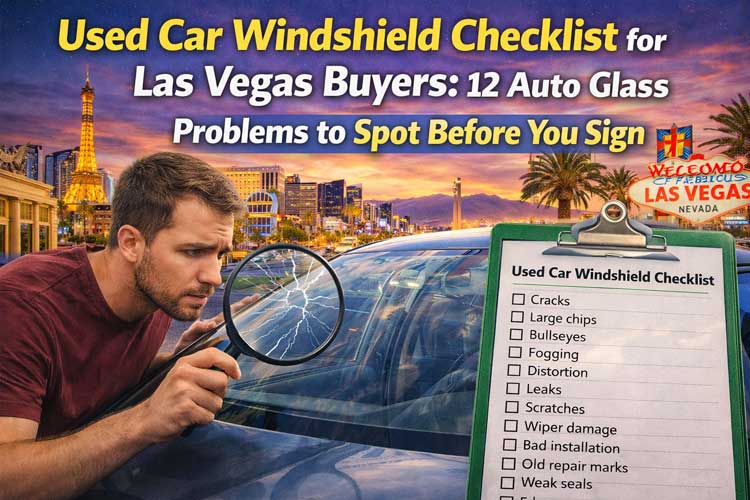
    Used Car Windshield Checklist for Las Vegas Buyers: 12 Auto Glass Problems to Spot Before You Sign. Buying a used car in Las Vegas can feel like a great deal right up until the first sunrise hits the windshield and you realize you also bought someone else’s glass problems.

    Used Car Windshield Checklist for Las Vegas Buyers

    That happens here more than people expect. Las Vegas is known for abundant sunshine and triple-digit summer heat, and that kind of climate is brutal on windshields, window seals, and power windows. A tiny chip, dried-out molding, or sloppy old glass job can look minor on the lot and become a real headache a week later. 

    At Power Window Repair Las Vegas, we’ve been serving local drivers for over 30 years, with 4 locations in Las Vegas, affordable pricing, and great quality work. We truly pride ourselves with excellence on auto glass repairs, and that includes helping buyers spot trouble before they sign on the dotted line.

    Why used car buyers in Las Vegas should care about auto glass

    A windshield is not just there to block wind. On many newer used cars, it also works with safety tech like lane-departure warning, lane-keeping assistance, and forward-collision systems. NHTSA notes that these driver-assistance technologies can help reduce crashes, and some lane-related systems rely on camera-based vision through the windshield. 

    That means a bad windshield replacement, a camera bracket problem, or even distortion in the glass can be more than cosmetic. It can affect how the vehicle feels, how clearly you see, and in some cases how its safety features behave.

    A quick lot check before the test drive

    Before you fall in love with the paint, do this first:

    Park where you can look at the car in both shade and direct sun. Stand outside and scan the windshield from a few angles. Then sit in the driver’s seat and look through the glass the way you actually would on your commute. After that, run every window up and down, and listen for anything that sounds off.

    That five-minute routine catches a lot.

    The 12-point checklist

    1. Fresh rock chips

    Start with the obvious. Look for small bullseyes, stars, or impact marks anywhere in the windshield.

    A seller may call it “just a tiny chip,” but in Las Vegas heat, tiny chips do not always stay tiny. If you want to understand how fast that can get expensive here, this related post is worth reading: The Hidden Cost of Ignoring Minor Chips in Las Vegas SunshineAttachment.png.

    2. Cracks that reach the edge

    A short crack in the middle of the glass is one thing. A crack that reaches the outer edge is a bigger red flag.

    Edge cracks usually spread faster, and they often mean the glass is already under serious stress. If you see one, treat it as a likely replacement issue, not a casual “maybe later” repair.

    3. Sand pitting and hazy “desert wear”

    This one fools a lot of buyers.

    The windshield may look okay from straight on, but when the sun hits it at an angle, it starts to sparkle, haze, or look slightly frosted. That is often years of desert sand, freeway grit, and wiper wear.

    If the used car has spent its life around the valley, that is not unusual. Our post on How Highways & Freeway Debris in Henderson Can Impact Your WindshieldAttachment.png explains why Southern Nevada roads are especially rough on glass.

    4. Wiper scratches in the driver’s line of sight

    Look for arc-shaped wipe marks across the glass, especially on the driver’s side.

    Old blades plus dry dust can leave fine scratches that are easy to miss on the lot and miserable at sunrise, sunset, or night. If you see a lot of scratching where the blades travel, assume visibility will feel worse in real-world driving than it does in a calm parking lot.

    5. Milky edges or delamination

    Check the outer perimeter of the windshield carefully.

    If you see white, cloudy, or milky areas between the layers of glass, that can be a sign of delamination. It is not something most sellers advertise, but it is exactly the kind of detail that makes a used car feel older and rougher than its mileage suggests.

    6. Uneven molding or signs of a bad old replacement

    A replaced windshield is not automatically bad news. Plenty of good cars have had windshield work done.

    What matters is whether it was done well. Watch for loose molding, extra adhesive, trim that sits unevenly, or glass that looks slightly off-center. Those details can point to rushed workmanship, and rushed workmanship is the last thing you want on a used vehicle.

    7. Wind noise clues and water-leak evidence

    Open the doors and smell the cabin. Look at the headliner corners and A-pillars. Then, on the test drive, listen for whistling or buzzing around the windshield at speed.

    Musty smells, water stains, or unusual wind noise can point to seal problems or a poor prior install. Those issues rarely get better on their own.

    8. Chips or cracks near the mirror and camera area

    Pay close attention to the area behind the rearview mirror.

    If the car has lane-departure warning, lane-centering, automatic braking, or other modern driver-assistance features, NHTSA says some of those systems rely on windshield-facing cameras. A used car with a chip, crack, sloppy bracket area, or warning light near that part of the glass deserves extra caution. 

    If you are shopping newer used EVs or late-model cars with more advanced glass tech, this guide may help too: Electric Vehicle Windshields in Las Vegas: Special Auto Glass Considerations for Teslas and Other EVsAttachment.png.

    9. Optical distortion or waviness

    Pick a straight object in the distance—a light pole, building edge, or signpost—and look through different parts of the windshield.

    If that straight line bends, doubles, or looks wavy through one section of the glass, do not ignore it. That kind of distortion gets old very quickly on a daily commute.

    10. Mismatched side glass

    Check the logos and tint tone on the side windows.

    If one door glass panel looks different from the others, ask why. Sometimes the answer is harmless, like an old break-in. Sometimes it hints at collision damage, poor-quality replacement glass, or a side window job that was done cheaply.

    11. Slow, crooked, or sticking power windows

    Run every power window all the way down and all the way back up.

    If a window tilts, hesitates, clicks, or struggles near the top, that is worth noting. Used car buyers often focus on the windshield and miss the fact that one bad regulator or failing motor can become a same-month repair bill.

    If you want to know what those symptoms usually mean, read 5 Signs Your Power Window Motor Is FailingAttachment.png.

    12. Rear glass damage and dead defroster lines

    Do not stop at the windshield.

    Check the rear glass for corner cracks, chips, sloppy tint damage, and broken defroster lines. On hatchbacks, SUVs, and family cars, rear glass problems can quietly hurt visibility, comfort, and resale value later on.

    Two free checks smart buyers should always do

    If you are buying from a dealer, the FTC’s Used Car RuleAttachment.png requires a Buyers Guide on used cars offered for sale. The FTC says that guide tells you whether the vehicle is being sold as-is or with a warranty, and it also tells buyers to ask to have the car inspected by an independent mechanic before purchase. 

    Then run the VIN through the official NHTSA recall lookupAttachment.png. NHTSA says you can find the VIN on the lower left of the windshield, and the recall search will show whether that specific vehicle has unrepaired recalls. 

    What should make you negotiate—and what should make you walk away?

    A small chip away from your line of sight, one slow side window, or light wiper scratching is usually a negotiation issue. Ask for a price adjustment, ask the seller to fix it, or at least factor the repair into your budget before signing.

    A long edge crack, visible water-leak evidence, serious distortion, a loose camera area, or multiple glass problems on the same car deserve a lot more caution. Those are the issues that can turn a bargain into an expensive mistake.

    If you do buy the car and later need help figuring out coverage, our post on Understanding Auto Glass Insurance Claims in NevadaAttachment.png is a useful follow-up.

    Why buyers trust Power Window Repair Las Vegas

    Used car buyers usually want the same thing: a straight answer.

    Is the windshield fine? Is it repairable? Is the side glass a minor issue, or is it the beginning of a bigger repair bill?

    That is where Power Window Repair Las Vegas comes in. With over 30 years of experience, 4 Las Vegas locations, affordable pricing, and great quality work, we help buyers and owners get honest answers without pressure. We truly pride ourselves with excellence on auto glass repairs, whether that means a chip repair, a windshield replacement, or finally fixing the power window the seller forgot to mention.

    Final takeaway

    A used car’s glass tells you a lot before a mechanic ever puts it on a lift.

    It can reveal neglect, heat damage, poor previous repairs, hidden leak problems, and even tech issues around newer driver-assistance systems. So before you sign, slow down and check the glass like it matters—because it does.

    Look through the windshield in real light. Run every window. Check the edges, seals, and rear glass. Read the Buyers Guide. Run the VIN.

    That extra five minutes can save you real money—and a lot of regret—once the Las Vegas sun starts doing what it always does.

  • Rearview Mirror Falling Off in Summer?

    Rearview Mirror Falling Off in Summer?

    Rearview Mirror Falling Off in Summer? How Las Vegas Heat Affects Mirror Mounts and Windshields. Few things feel more “Las Vegas summer” than getting into a car that’s been baking in the sun, touching the mirror to adjust it, and suddenly feeling the whole thing wobble—or worse, drop.

    Rearview Mirror Falling Off in Summer?

    It catches a lot of drivers off guard because the rearview mirror seems simple. But in real life, that mirror is hanging from one of the hottest pieces of glass on the car, day after day, in a climate that is famous for intense sun and triple-digit heat.

    At Power Window Repair Las Vegas, we bring over 30 years in business, 4 locations in Las Vegas, affordable pricing, and great quality work to every job. We truly pride ourselves with excellence on auto glass repairs, and that includes the small but important problems around mirror mounts, windshield glass, sensors, and top-edge seal areas.

    Why this happens so often in Las Vegas summers

    Las Vegas is commonly known for abundant sunshine and summer temperatures that reach into the triple digits. On top of that, parked-car studies found cabin temperatures can rise by about 40°F within an hour, and one Arizona State University study found dashboards in sun averaged 157°F after one hour. That is a brutal environment for anything bonded to the inside of a windshield—especially a rearview mirror mount that has already been aging for years. 

    Rearview mirror mounts also live with constant vibration, quick cool-downs from A/C, and the small bumps and jolts of daily driving. 3M’s own rearview mirror adhesive guidance says this is a “critical” application because rearview mirrors exist in conditions that exceed the capacity of many ordinary adhesives, including heat, humidity, vibration, and impact. 

    Why a loose rearview mirror is more than just annoying

    The inside rearview mirror is not just a convenience item. FMVSS 111 requires passenger cars to have an inside rearview mirror, and the rule says the mounting must provide stable support and allow the mirror to be adjusted properly. 

    On newer vehicles, the mirror area can matter even more. In a 2023 Mercedes-Benz recall, the company said the multi-purpose camera and rearview mirror on certain EQS vehicles could be insufficiently attached to the windshield, and if they detached it could impair front passenger airbag deployment and driver-assistance systems including Lane Keeping Assist, Traffic Sign Assist, rain and light sensors, and other safety functions

    So when a rearview mirror starts drooping, vibrating, or falling off in summer, it is not just a cosmetic annoyance. It can also be a clue that the mirror mount area, the windshield, or the tech around that part of the glass needs attention.

    How Las Vegas heat affects mirror mounts and windshields

    Mirror mounts are one of those parts people assume can be glued back on with “whatever works,” but the adhesive story is a lot more specialized than that. 3M says a specialty rearview mirror adhesive is recommended specifically because of how demanding the environment is, and notes that its high-bond product is designed to hold up in high temperatures, humid environments, vibration, and impact. Meanwhile, Permatex’s technical sheet for its rearview mirror adhesive says repairs are ideally made at 50°F to 75°F—a reminder that a scorching Las Vegas driveway is not ideal bonding weather. 

    That is also why summer mirror failures sometimes show up after a previous “good enough” repair. The glue may have held through spring, then finally let go once the windshield started seeing true desert heat. If you want the bigger picture on how sun and heat wear down bonded glass systems over time, it helps to understand that mirror mounts and windshield adhesives are fighting the same climate.

    6 warning signs your mirror mount is starting to fail

    If your rearview mirror has not dropped yet, you still may get some warning:

    • The mirror slowly sags overnight or changes angle while driving
    • You hear a faint click or creak when adjusting it
    • The mirror vibrates more than usual on rough roads
    • You can see old glue residue, a cloudy ring, or messy adhesive around the mount
    • The plastic cover around the mirror pod feels loose or doesn’t sit right
    • You spot a tiny chip or crack near the mirror button area at the top-center of the windshield

    Those symptoms are worth checking sooner rather than later, especially in Las Vegas and Henderson where heat can turn a small bonding issue into a full windshield problem pretty quickly.

    When it is “just” a mirror repair—and when the windshield may need attention too

    Sometimes the mirror itself or the adhesive fails cleanly, and the fix is straightforward. But not always.

    Honda technical guidance has noted cases where the interior rearview mirror separated from the windshield and pulled some glass from the windshield because of abnormal high-shear force. Mazda’s recall repair procedure for certain 2019 Mazda3 vehicles goes even further: it says that if there are chips at the mirror base slit, the front windshield must be replaced

    That is a big reason not to guess. If the mirror fell off and the glass around the mounting point is chipped, cracked, or gouged, you may not be looking at a simple reglue. And if your vehicle has a camera, rain sensor, or light sensor around the mirror area, that equipment needs to be protected and checked carefully as part of the repair. 

    What not to do when the mirror drops

    The biggest mistake drivers make is reaching for random glue and trying to stick the mirror back on while the windshield is still hot.

    Rearview mirrors are one of those jobs where specialty adhesive matters. 3M explicitly recommends a dedicated rearview mirror adhesive because ordinary products often are not built for the heat, vibration, and stress of the application. And again, common mirror-adhesive instructions call for much cooler installation temperatures than what a Las Vegas windshield often sees in summer. 

    A few other things to avoid:

    • Do not keep driving around with a dangling mirror harness or loose sensor cover
    • Do not force the mirror base if it feels stuck to chipped glass
    • Do not hang extra weight from a mirror that already feels loose
    • Do not ignore new chips at the mount area after the mirror comes off

    How to help prevent repeat mirror failures

    A little prevention goes a long way in Southern Nevada:

    Park in shade when you can. Use a windshield sunshade. Try not to grab the mirror like a handle when getting in or out of the car. If you have a windshield replacement done, make sure the mirror area and any nearby sensor housings are reinstalled correctly. And if you start noticing top-edge wind noise, dust trails, or moisture near the upper windshield area, do not wait for a summer failure before getting it inspected.

    This is one of those repairs that is usually cheaper and easier when you catch it early.

    Related reads on our site

    If you want to dig deeper into the heat, seal, and windshield side of this topic, these are good next reads:

    Helpful external resources

    For non-competitor reference material, these are useful:

    Why Power Window Repair Las Vegas is a smart choice

    At Power Window Repair Las Vegas, we do not treat a falling rearview mirror like a throwaway nuisance. We look at the full picture:

    • Is the mount loose, or is the glass damaged too?
    • Is there sensor or camera equipment around the mirror pod?
    • Did the old adhesive fail because of heat, age, or a bad previous repair?
    • Can it be fixed cleanly, or is the windshield itself part of the problem?

    That kind of inspection matters in Las Vegas, where summer heat can punish anything attached to the windshield. It also matters when you want the job done once, done right, and done at a fair price.

    Final takeaway

    If your rearview mirror is falling off in summer, it is rarely “just bad luck.” In Las Vegas, the combination of extreme heat, hot windshield glass, aging adhesive, and everyday vibration can slowly weaken mirror mounts until they finally let go.

    Sometimes the answer is a proper professional mirror reattachment. Sometimes the windshield mount area has been damaged enough that the glass needs more than a quick fix.

    Either way, catching it early is almost always cheaper than waiting until the mirror drops, the glass chips, or the sensor area gets involved.

    If your mirror is loose, wobbling, or already on the seat, Power Window Repair Las Vegas is ready to help with affordable pricing, great quality work, and the kind of careful auto glass service that keeps your windshield safe and your rearward view where it belongs.

  • How Desert Sand and Micro‑Pitting Reduce Windshield Clarity for Las Vegas Drivers

    How Desert Sand and Micro‑Pitting Reduce Windshield Clarity for Las Vegas Drivers

    How Desert Sand and Micro‑Pitting Reduce Windshield Clarity for Las Vegas Drivers (and When to Replace). If you’ve driven around Las Vegas long enough, you’ve probably noticed this:

    Your windshield looks clean… but when the sun hits it just right or headlights come at you at night, it feels like you’re looking through a foggy film you can’t wipe away.

    That’s not your imagination. That’s desert sand and micro‑pitting slowly chewing up the surface of your glass.

    How Desert Sand and Micro‑Pitting Reduce Windshield Clarity for Las Vegas Drivers

    At Power Window Repair Las Vegas, we’ve been working on auto glass in the valley for over 30 years, with 4 convenient locations across Las Vegas. We’re known for affordable pricing, great quality work, and we genuinely pride ourselves with excellence on auto glass repairs—including those “mysteriously hazy” windshields that never quite look clear anymore.

    In this guide, we’ll break down:

    • What micro‑pitting is
    • Why Las Vegas desert driving makes it worse
    • How it affects visibility and safety
    • When it’s time to replace the windshield instead of just living with it

    What Is Micro‑Pitting on a Windshield?

    Micro‑pitting is what happens when your windshield is hit by countless tiny particles—sand, dust, and grit—over thousands of miles.

    Each impact leaves a microscopic crater or scratch. You rarely see a single one with the naked eye, but over time they add up to:

    • A hazy, sand‑blasted look
    • Light scattering and weird reflections
    • A windshield that never looks truly “crystal clear” again

    Auto glass specialists describe pitting as a form of wear that gradually obstructs the driver’s visibility and weakens the glass, especially in areas with a lot of airborne sand and debris. 

    Several safety and glass experts also point out that pitted windshields can:

    • Increase glare from the sun and headlights
    • Distort objects in your field of view
    • Make wipers less effective and wear them out faster 

    So even without one big crack, a heavily pitted windshield can be just as dangerous.


    Why Las Vegas Desert Sand Beats Up Your Windshield

    Las Vegas is perfect for micro‑pitting (in the worst way):

    • Dust storms & high winds: Strong winds lift fine desert dust and sand into the air. Those particles hit your windshield at highway speeds and act like a continuous low‑grade sandblaster. 
    • Freeway driving: The 95, 215, and I‑15 send a steady stream of grit and tiny rocks toward your glass—especially behind trucks or construction traffic. Regions with high volumes of dust and traffic see much higher rates of pitting. 
    • Construction zones: The valley always seems to have a new project going. Loose debris on the road, plus trucks kicking up sand, accelerates surface damage.
    • Dry climate: There’s very little natural “rinse” from frequent rain. Dust, brake dust, and sand often sit on the glass until you wash it off—if you wash it off gently.

    Desert‑focused auto glass articles out of Arizona and other dry regions report that desert highways can haze and pit windshields significantly faster than in milder climates, often forcing replacement sooner even without a major crack. 


    How Desert Micro‑Pitting Reduces Visibility and Clarity

    A pitted windshield doesn’t just look tired—it changes how light behaves.

    Those tiny pits and scratches act like mini lenses and prisms, scattering light in all directions instead of letting it pass straight through. That creates:

    1. Glare From Sun and Headlights

    Glass safety and windshield‑care articles are very consistent on this:

    • Pitting and fine scratches dramatically increase glare, especially when you’re driving into the sun or facing oncoming headlights. 
    • Light “blooms” around headlights and street lamps at night
    • Lane lines can look washed‑out in bright conditions, forcing your eyes to work harder to stay focused 

    Glare research on windshields has shown that reflections and “veiling glare” make it harder to detect hazards and reduce contrast between the road and obstacles. 

    2. Distortion and Hazy Vision

    Signs of pitting include:

    • Objects that look slightly warped or fuzzy through certain parts of the glass
    • A cloudy or frosted look in the area where wipers travel, even right after cleaning
    • A consistent “sparkle” or graininess when you look through the glass in bright light 

    This forces your eyes to constantly adjust, which gets tiring—especially on long drives between Las Vegas and Henderson, or out toward Boulder City, Pahrump, or the California line.

    3. Wiper and Wet‑Weather Problems

    Pitted glass:

    • Tears up wiper blades faster
    • Prevents blades from sealing cleanly against the glass
    • Leaves streaks and smears that compound visibility problems in rain 

    In a heavy downpour or monsoon cell, that loss of clarity can become a real safety issue.


    Is It Just Cosmetic? Safety & Legal Concerns

    It’s easy to write off pitting as “just annoying,” but the safety side is real:

    • Auto glass safety standards emphasize optical clarity as a key part of windshield performance; poor visibility is a direct safety risk, not just a cosmetic flaw. 
    • Safety and legal guides for drivers note that windshields must not be so damaged or distorted that they obstruct the driver’s view—whether from cracks, chips, or other visibility‑reducing defects. 

    Some experts also point out that heavily pitted glass is weaker and more likely to shatter in a crash than smooth, healthy glass, because all those tiny impacts have already stressed the surface. 

    So if you’re constantly fighting glare or distortion, it’s not just an annoyance—it’s a safety decision.


    When Micro‑Pitting Means It’s Time to Replace the Windshield

    There’s no single “legal” line where pitting automatically requires replacement, but there are practical signs that you’ve crossed the line from annoying to unsafe.

    Here’s a simple way to think about it:

    You Can Often Wait If:

    • The pitting is mild and mostly around the edges
    • You don’t notice glare unless the sun is at a very specific angle
    • Night driving still feels normal
    • Wipers work smoothly and you don’t see streaks or distortion in your main line of sight

    It’s Time to Seriously Consider Replacement If:

    • You dread driving into the sun because the windshield lights up with sparkles
    • Oncoming headlights or LED bars bloom into big blobs of light at night
    • You have to lean, crane your neck, or duck to see around the worst areas
    • The glass looks hazy or frosted in the wiper path even right after a wash
    • Your wipers chatter and smear, or never clear the glass completely

    Many glass pros warn that once pitting affects your ability to see clearly—or distracts you enough to impact reaction time—replacement is the best and safest option, even if there aren’t any big cracks yet. 

    If you’re not sure where your windshield falls, we’re happy to give you a straight answer and options at Power Window Repair Las Vegas.


    Why “Buffing It Out” Usually Isn’t a Long‑Term Fix

    A common question we hear:

    “Can’t you just polish the pits out instead of replacing the whole windshield?”

    There are glass polishing processes, but they come with limitations:

    • To remove deep pits, you have to remove glass material—too much and you can warp the optics of the windshield or create subtle waves. 
    • Heavy polishing in the driver’s main viewing area risks distortion, which can be just as bad (or worse) than the original pitting.
    • Light polishing might improve things a bit, but it won’t magically erase years of desert sand damage.

    That’s why many auto glass specialists say there’s “no quick fix” for a badly pitted windshield: once the surface is chewed up across a wide area, replacement is the only way to restore like‑new clarity and safety


    How to Slow Down Sand & Micro‑Pitting in the Las Vegas Desert

    You can’t avoid every grain of sand, but you can slow the damage and stretch the life of your next windshield:

    1. Change How You Drive Around Trucks and Construction

    • Leave extra space behind semis, gravel haulers, and work trucks.
    • When you can, avoid tailgating on freshly milled or newly graveled surfaces.
    • If there’s a calmer side street or alternate route during heavy construction, it may actually save your windshield.

    Desert‑driving guides and auto glass pros agree that giving trucks more room dramatically reduces sand and grit impacts on windshields. 

    2. Treat Wipers and Glass Gently

    • Never dry‑wipe dusty glass—you’re basically using your wipers like sandpaper.
    • Rinse off dust first, or use plenty of washer fluid.
    • Replace wipers at the first sign of streaking, chatter, or cracking.

    Some desert‑city shops also recommend quality hydrophobic coatings to help dust and water glide off so wipers don’t drag grit across the glass as much. 

    3. Keep Up with Rear & Side Glass Care

    Your front windshield takes the brunt of the damage, but side and rear windows also get hit with dust and sand, which can affect visibility and window operation.

    For more glass‑care tips in hot, dusty conditions, check out:

    4. Think Ahead If You Drive Something Special

    If you drive an EV or a classic car, your glass is often tied to sensors, styling, and value.


    What About Insurance and a Pitted Windshield?

    Many drivers assume insurance only helps if the glass is visibly cracked, but in some cases, policy coverage may also apply if visibility is severely compromised—even without one big rock chip.

    For a deeper dive into how glass claims work here in Nevada, we’ve put together:

    We can help you:

    • Figure out whether repair or replacement makes more sense
    • Work with your insurer on the claim
    • Keep your out‑of‑pocket costs as low as possible

    How Power Window Repair Las Vegas Handles Pitted & Sand‑Damaged Windshields

    When you bring your vehicle to Power Window Repair Las Vegas (or we come to you with mobile service), here’s how we typically handle desert‑worn glass:

    1. Straightforward Inspection We look at how severe the pitting is—especially in your main line of sight—and check for chips, cracks, and wiper damage.
    2. Honest Repair vs. Replacement Advice If the glass is just lightly worn and you’re not having visibility issues, we’ll tell you. If we can clearly see that pitting is affecting clarity and safety, we’ll explain why replacement is the better call.
    3. Quality Glass and Proper Installation We use quality materials and follow proper prep and curing steps that stand up to Las Vegas heat, so you’re not back in the same spot too soon.
    4. Affordable Pricing & Local Expertise With over 30 years in business, 4 locations in Las Vegas, and a reputation for affordable pricing and great quality work, we’ve seen just about every kind of desert‑damaged windshield you can imagine—and fixed it.
    5. Help With the Paperwork If insurance is involved, we’ll help you navigate the process so you spend more time driving and less time on hold.

    Ready to See Clearly Again?

    If you’re squinting through glare, tilting your head to avoid “sparkle zones,” or just tired of a windshield that never looks clean no matter how much you wipe—it might be time to stop fighting the glass and replace it.

    At Power Window Repair Las Vegas, we’re here to make that easy:

    • Over 30 years of local experience
    • 4 convenient locations across the valley
    • Affordable pricing and great quality work
    • A team that truly prides itself with excellence on auto glass repairs

    You don’t have to guess whether your windshield is “too far gone.”

    Bring it by—or schedule a mobile visit—and we’ll give you a clear, honest answer and options that fit your budget.

  • What Las Vegas Drivers Must Know Before Glass Replacement

    What Las Vegas Drivers Must Know Before Glass Replacement

    Windshield Cameras & Calibration: What Las Vegas Drivers Must Know Before Glass Replacement. If your car has lane keep assist, automatic braking, or adaptive cruise, there’s a good chance it also has a camera mounted to the windshield. That little black box behind your rearview mirror isn’t just a camera—it’s the “eyes” of your safety systems.

    What Las Vegas Drivers Must Know Before Glass Replacement

    So when you replace the windshield, you’re not just swapping glass. You’re messing with the aiming of those eyes. If they’re off by even a few degrees, the car can misread lanes, misjudge distance, or shut those features off completely.

    At Power Window Repair Las Vegas, we’ve been dealing with auto glass and electronics in the valley for over 30 years, with 4 convenient locations in Las Vegas. We focus on affordable pricing and great quality work, and we truly pride ourselves with excellence on auto glass repairs—including vehicles with windshield cameras and ADAS (Advanced Driver Assistance Systems).

    This guide explains windshield cameras & calibration, and what Las Vegas and Henderson drivers need to know before they schedule any glass work.


    1. What Do Windshield Cameras Actually Do?

    Those small cameras and sensors behind your windshield power many of the modern features you see advertised as:

    • Lane Departure Warning
    • Lane Keeping Assist / Lane Centering
    • Forward Collision Warning
    • Automatic Emergency Braking
    • Adaptive Cruise Control

    The National Highway Traffic Safety Administration (NHTSA) describes these as driver assistance technologies—they monitor lane markings and other vehicles and warn you or even intervene when something goes wrong. 

    The Insurance Institute for Highway Safety (IIHS) has found that camera‑based front crash prevention systems can significantly reduce rear‑end crashes when they’re working correctly. 

    Short version:

    Your windshield camera isn’t optional. It’s part of your safety system, just like seat belts and airbags.


    2. Why Windshield Replacement Affects Camera Calibration

    Windshield cameras see the world through the glass. When you change that glass, a lot of small things change with it:

    • The exact position and angle of the camera housing
    • The thickness and optical properties of the new glass
    • How light bends (refracts) as it passes through the windshield

    Even when the new windshield is installed perfectly, the camera is almost never in exactly the same position it was before. That tiny difference is enough to throw off its aim.

    Automaker and industry guidance is very consistent on this:

    • The Tesla service manual explicitly says that if a camera or windshield is replaced, you must clear calibration so the car can recalibrate the cameras. 
    • ADAS calibration experts and glass industry organizations note that recalibration is required after most windshield replacements to restore the original safety performance. 

    If the shop treats your car like it’s an old, camera‑less sedan—glass in, wipe, send you home—your safety systems may no longer be seeing the road properly.


    3. What “Calibration” Actually Means

    Calibration is basically a re‑aiming and verification process for your cameras and sensors after glass work.

    Depending on the vehicle, it can be:

    Static Calibration

    • Done in a controlled shop environment
    • Uses targets or patterns placed at precise distances in front of the vehicle
    • The car’s computer uses those targets to align the camera’s field of view

    Dynamic Calibration

    • Done on the road, often after a static step
    • Requires driving at certain speeds on roads with clear lane markings
    • The system fine‑tunes calibration as the vehicle drives

    Some vehicles require both static and dynamic steps. Technician forums frequently mention “dual‑method” calibrations on certain models (like some Mazdas) where both procedures are required to satisfy the manufacturer’s spec. 

    For Teslas, the process often includes:

    • Clearing calibration in the service menu
    • Driving a specified number of miles on well‑marked roads while the car recalibrates its cameras 

    If a shop can’t explain how your specific car is calibrated after replacement, that’s a red flag.


    4. What Can Go Wrong If Calibration Is Skipped or Done Wrong

    Skipping calibration or doing it incorrectly is not just a technicality—it can show up in real‑world driving in some unnerving ways:

    • Lane‑keep assist nudging you too early or too late
    • Forward collision warning going off when nothing is there
    • Automatic emergency braking failing to react when it should
    • “ADAS” or “camera blocked” warnings that never seem to go away

    ADAS calibration articles and safety organizations warn that misaligned cameras may:

    • Read lane lines too far left or right
    • Trigger false collision warnings
    • Fail to warn you when you actually drift or approach another vehicle
    • Shut off the system entirely and store fault codes 

    Remember, IIHS research shows these systems substantially reduce crashes when they’re working properly. If calibration is off, you lose those benefits and may even start trusting a system that isn’t seeing the road correctly. 


    5. Questions to Ask 

    Before

     You Book Windshield Replacement in Las Vegas

    No matter where you go, these questions will help you protect yourself and your car’s safety systems:

    1. “Does my car have a windshield camera or ADAS?” If you’re not sure, ask the shop to check. Many late‑model vehicles do, even if it’s not obvious at a glance.
    2. “Will my vehicle need ADAS calibration after the new windshield?” For most vehicles with cameras or sensors on the glass, the answer should be yes.
    3. “Do you handle the calibration in‑house or with a trusted partner?” Some shops have equipment on‑site; others work with dealers or dedicated ADAS facilities. Both can be fine—what matters is that it actually gets done correctly.
    4. “Is calibration included in the quote?” You don’t want to be surprised with a separate big bill at the end.
    5. “What kind of glass are you installing?” Ask if it meets OEM specifications for camera‑equipped vehicles and complies with current safety standards for glazing materials. 

    At Power Window Repair Las Vegas, we go through these details with you so you understand what’s being done and why, and how that ties into our commitment to affordable pricing and great quality work.


    6. Las Vegas Heat, Desert Driving & Windshield Cameras

    Las Vegas and Henderson aren’t easy environments for modern glass and electronics:

    • Triple‑digit temps bake the windshield and camera housing
    • Rapid transitions from “oven‑hot” parking lots to max A/C inside
    • Dust storms and monsoon rains hitting the glass and seals

    That combination can:

    • Stress chips and small cracks so they spread faster
    • Age adhesives and seals around the camera and windshield
    • Make cameras work harder through dirty or pitted glass

    For how heat specifically affects adhesives and seal life, we go into detail here:

    And if you’ve been putting off small chips that sit right in front of the camera, this is worth a read:


    7. Insurance, Cameras & Calibration in Nevada

    Many comprehensive insurance policies now recognize that ADAS calibration is part of a proper windshield replacement on newer vehicles. Depending on your coverage, calibration may be:

    • Built into the claim
    • Billed separately but covered
    • Or partially out‑of‑pocket if the policy hasn’t been updated

    If you’re not sure what your policy covers, we can help you make sense of it when you call. For a bigger overview of how glass claims work in our state, see:

    Knowing your deductible and how calibration is handled makes it easier to decide when to replace a damaged windshield and how to budget for it.


    8. How Power Window Repair Las Vegas Handles Windshield Cameras & Calibration

    When you bring a camera‑equipped vehicle to Power Window Repair Las Vegas (or we come to you with mobile service), here’s how we approach it:

    1. Identify your ADAS equipment
      • We check for cameras, sensors, and radar related to the windshield.
    2. Discuss glass and calibration options
      • We explain what type of glass we’re using and what calibration your vehicle needs.
    3. Perform a careful windshield replacement
      • Using proper primers and urethanes
      • Respecting safe drive‑away times in Las Vegas heat
    4. Arrange or perform ADAS calibration
      • Following the appropriate static and/or dynamic procedures for your make and model
      • Confirming warning lights are cleared and systems behave normally
    5. Road test & verification
      • When appropriate, we road‑test to confirm there are no obvious ADAS issues—no weird lane‑keep behavior or constant warnings.

    Because we also specialize in power windows and door glass, we can often address any related side‑glass or regulator issues in the same visit, which is especially helpful for rideshare & delivery drivers who depend on their car to earn. If that’s you, you might also like:


    9. When to Call About Calibration (Even If the Glass Was Already Replaced)

    You should get your vehicle checked soon if, after a windshield replacement, you notice:

    • Lane‑keep assist or lane centering feels “off”
    • Forward collision warnings at random times
    • ADAS warnings that appeared right after the glass work
    • The shop never mentioned cameras or calibration at all

    Even if another shop did the glass, we’re happy to talk through what you’re seeing and help you figure out next steps.


    Ready to Replace a Windshield with Cameras in Las Vegas or Henderson?

    If you drive a camera‑equipped vehicle—and most newer cars do—and you’re staring at:

    • A cracked windshield
    • Chips right where the camera looks through the glass
    • ADAS warnings after a rock hit or previous repair

    …it’s time to plan a windshield replacement that includes proper camera calibration, not just new glass.

    👉 Visit Power Window Repair Las Vegas to schedule service or request a call.

    With over 30 years in business, 3 locations in Las Vegas, affordable pricing, and great quality work, we’ll help you navigate windshield cameras & calibration the right way—so your car’s safety systems keep watching the road, even after the glass has been replaced.

  • How Auto Glass Issues Affect Your Drive in Henderson

    How Auto Glass Issues Affect Your Drive in Henderson

    Windshield Noise, Whistling, and Vibration: How Auto Glass Issues Affect Your Drive in Henderson. If you drive around Henderson long enough, you eventually notice it:

    • A whistling that kicks in on the 215
    • A buzzing or humming at 60+ mph
    • A rattle or vibration every time you hit a bump

    It’s easy to turn up the radio and pretend it’s nothing. But windshield noise is usually your car’s way of telling you something’s off with your auto glass, seals, or installation—and in our desert heat, those little issues almost never fix themselves.

    How Auto Glass Issues Affect Your Drive in Henderson

    At Power Window Repair Las Vegas, we’ve been taking care of drivers across Henderson and the Las Vegas Valley for over 30 years, with 4 locations in Las Vegas and mobile service that comes to you. We’re known for affordable pricing and great quality work, and we genuinely pride ourselves with excellence on auto glass repairs—from windshields and side glass to power windows and regulators.

    This guide breaks down windshield noise, whistling, and vibration, why it happens, and what Henderson drivers can do about it before it turns into a safety problem or an expensive fix.


    What That Whistling or Rattling Windshield Really Means

    Windshield noise usually isn’t random. It’s often a sign of:

    • Gaps between the glass and body
    • Worn or shrunken weatherstripping
    • A previous windshield replacement that wasn’t sealed correctly
    • Cracks or chips that disrupt airflow

    Glass and body shops around the country agree:

    • A high‑pitched whistle at highway speeds is commonly caused by a compromised windshield seal or small gaps where air is forced through at speed. 
    • Rattling or vibration over bumps can mean the windshield isn’t fully bonded to the frame or the adhesive has failed in some areas. 

    In other words, if your windshield sounds wrong, there’s usually something physically wrong—even if you don’t see it right away.


    Common Windshield Noise Problems We See in Henderson

    1. Whistling at Highway Speeds

    If your car is quiet around town but starts whistling on the 215, 95, or I‑11, that points to:

    • A small air leak around the glass
    • A dried, cracked, or shrunken rubber seal
    • A windshield that’s slightly misaligned from a prior replacement

    Auto glass safety articles note that air leaks around the edges are a classic sign of weak adhesive or compromised seals, and ignoring them can eventually lead to water intrusion and further glass damage. 

    2. Buzzing or Humming That Changes With Speed

    A buzzing or low hum that gets louder as you speed up is usually about turbulence:

    • A tiny gap in the seal
    • Trim that’s lifted slightly
    • A chip or crack disturbing the airflow

    Some repair guides point out that strange noises getting louder with acceleration can indicate cracks or gaps that let air in, especially when the sound changes with speed or wind direction. 

    3. Rattling or Vibration Over Bumps

    If the glass itself shivers or rattles on rough Henderson roads:

    • The windshield may not be fully bonded to the frame
    • Old adhesive might be failing
    • A previous installer may have left high/low spots or old urethane in the channel

    That’s more than an annoyance. A windshield that can move under vibration isn’t doing its full job as a structural component—especially in a crash or rollover.


    Why Windshield Noise Is a Safety Issue, Not Just Annoying

    Turning up the music gets rid of the sound—but it doesn’t fix what’s causing it.

    1. Your Windshield Is Part of the Safety Cage

    Modern vehicles are engineered around the windshield. Safety and testing organizations note that the windshield:

    • Helps support the roof in a rollover
    • Plays a role in keeping occupants inside the vehicle
    • Acts as a backstop for passenger airbags during deployment 

    Federal safety standards like FMVSS 205 (Glazing Materials) and FMVSS 212 (Windshield Mounting) exist specifically to ensure the glass and adhesive can hold up in a crash and stay in the frame to protect occupants. 

    If your glass is loose enough to rattle or whistle, that bond may not be what it should be.

    2. Air & Water Leaks Don’t Stop at Noise

    Once you’ve got a gap big enough for that whistling:

    • Moisture can get behind the dash, into electronics, and into padding
    • Dust and fine desert grit can make its way into the interior
    • Rust can start at hidden metal surfaces around the pinch weld

    Auto glass repair resources warn that air leaks and whistling often go hand‑in‑hand with water intrusion, foggy glass, and musty odors. 

    3. Constant Noise = Driver Fatigue

    On top of the safety angle, a loud whistle or “drone” on your commute just wears you out. Over a week of back‑and‑forth driving between Henderson, Las Vegas, and job sites, that’s a lot of extra stress and distraction you don’t need.


    Why Henderson’s Climate Makes Windshield Noise More Likely

    Henderson drivers deal with a special mix of conditions:

    • Triple‑digit summers
    • Sharp temperature swings between day and night
    • Dry air that punishes rubber and plastics
    • Dust and occasional desert storms

    We break down how that kind of weather abuses power window parts in How Henderson Extreme Weather Impacts Your Power Windows—the same logic applies to your windshield seals and adhesives.

    Here’s how those conditions create noise:

    Heat Shrinks and Hardens Seals

    Long stretches of intense sun cause:

    • Rubber seals to shrink, crack, and harden
    • Weatherstripping to lose its flexibility and no longer press firmly against the glass

    Once that happens, small air gaps open up—perfect conditions for whistling and wind noise at speed.

    Our article on The Impact of Direct Sunlight on Auto Glass Adhesive Longevity in Las Vegas Heat dives deeper into how long‑term UV and high temperatures can age adhesives and seals at the glass edges.

    Desert Storms Attack the Seal Edges

    When a dust storm rolls through the valley, it’s not just your paint taking the hit. Fine sand works its way into:

    • Windshield molding
    • Edge seals
    • Cowling and trim

    Over time, that gritty friction can chew up the rubber, leading to leaks, noise, and loose‑feeling glass. We explain this in more detail in How Desert Storms in Southern Nevada Can Compromise Your Auto Glass Seal.

    Small Chips Become Big Cracks—Fast

    A lot of Henderson drivers already know this story: tiny rock hit, small chip, “I’ll deal with it later”… then one cold morning plus a hot afternoon, and suddenly there’s a crack across half the glass.

    Once cracks spread, they can:

    • Flex differently than the rest of the windshield
    • Create new vibration points
    • Change how air flows over the surface

    If you want to see how quickly that can get expensive here, check out The Hidden Cost of Ignoring Minor Chips in Las Vegas Sunshine.


    Quick At‑Home Checks for Windshield Noise

    Before you head into the shop, you can do a few simple tests (safely) at home or in your driveway:

    1. Listen at Different Speeds

    On a quiet stretch of road:

    • Note when the sound starts (40 mph? 60 mph?)
    • See if it changes when you open and close side windows
    • Check if it’s worse when you’re passing large trucks or in crosswinds

    This can help narrow down whether it’s truly the windshield or another window, mirror, or roof rack.

    2. Gently Inspect Seals and Trim

    With the car parked:

    • Look for visible gaps between the glass and rubber
    • Check for cracked, shrunken, or “chalky” weatherstripping
    • Lightly press on the interior trim—nothing should move or crunch

    (Don’t yank or pry at anything—if it’s already loose, you don’t want to make it worse.)

    3. Check for Water or Dust Trails

    After a car wash or Henderson rainstorm, look for:

    • Moisture near the lower corners of the dashboard
    • Water lines or fogging along the edges of the glass
    • Unusual dust patterns inside the glass

    Water or dust trails often show exactly where the air is sneaking in too.


    How Power Window Repair Las Vegas Diagnoses Windshield Noise & Vibration

    When you bring your car to Power Window Repair Las Vegas—or when we come to you in Henderson with mobile service—here’s what a typical noise/vibration visit looks like:

    1. Conversation First
      • When did the noise start?
      • Did you recently have glass or body work done?
      • Is it worse on certain roads or in high winds?
    2. Visual Inspection We look at:
      • Edge seals and weatherstripping
      • Previous adhesive work and any leftover old urethane
      • Chips, cracks, or distortions in the glass
    3. Seal & Fitment Check
      • We check for slight glass movement under controlled pressure
      • Look for spots where the glass isn’t sitting flush
    4. Road Test (When Needed) Sometimes the only way to really hear it is to drive it—especially with certain frequencies that only show up at speed.
    5. Plain‑English Recommendations Depending on what we find, we might recommend:
      • Resealing the existing windshield
      • Replacing worn molding or weatherstripping
      • Full windshield replacement if there’s structural or visibility concern
      • Checking related components (like sunroofs or door glass) if they’re contributing to noise

    For Henderson drivers who want to understand the bigger picture of repair vs replacement and why using a pro matters, our post Benefits of Professional Windshield Repair in Henderson is a great next read.


    When You Should Get Windshield Noise Checked Right Away

    You don’t have to panic over every faint sound—but there are times when you shouldn’t wait. Get things checked quickly if:

    • The whistle is loud as soon as you hit 40–50 mph
    • You feel the windshield vibrate or shudder over bumps
    • You see visible gaps, loose trim, or lifting molding
    • There’s water inside after rain or the car wash
    • The noise started right after a windshield replacement or bodywork

    If there’s an insurance component to your glass issue—especially after a rock hit or storm damage—our guide Understanding Auto Glass Insurance Claims in Nevada walks through how claims usually work here in the valley.


    Why Henderson Drivers Choose Power Window Repair Las Vegas

    When your windshield sounds wrong, you want it fixed properly, not patched.

    With Power Window Repair Las Vegas, you get:

    • Over 30 years of experience in the Las Vegas Valley
    • 4 locations in Las Vegas plus mobile service to Henderson
    • Affordable pricing that makes timely repair realistic
    • Great quality work on windshields, side glass, rear glass, and power windows
    • A team that truly prides itself with excellence on auto glass repairs

    Because we also specialize in power windows, regulators, and switches, we’re often able to sort out both the glass and the window mechanics in a single visit—critical when noise and leaks are related to how the window sits in the door.

    If you rely on your car for rideshare, delivery work, or long commutes between Henderson and the Strip, you may also like our Rideshare & Delivery Drivers’ Auto Glass Checklist for Surviving Las Vegas Roads for a deeper maintenance routine.


    Ready to Quiet Down Your Drive in Henderson?

    If you’re tired of:

    • Whistling on the freeway
    • Mysterious wind noise around the windshield
    • Rattles or vibrations that make your car feel less solid

    …it’s a good time to let a pro take a look.

    You can:

    At Power Window Repair Las Vegas, we’ll help you track down the source of your windshield noise, whistling, and vibration, fix it with affordable, high‑quality work, and get your Henderson drive feeling solid, quiet, and safe again.

  • Classic & Vintage Car Auto Glass in the Las Vegas Desert

    Classic & Vintage Car Auto Glass in the Las Vegas Desert

    Classic & Vintage Car Auto Glass in the Las Vegas Desert: Restoration, Safety, and Value. If you’re lucky enough to own a classic or vintage car in Las Vegas, you already know: the desert is beautiful to cruise through—and absolutely ruthless on old glass.

    Classic & Vintage Car Auto Glass in the Las Vegas Desert

    Wavy windshields, sand‑pitted side windows, cracked vent glass, dried‑out seals… it all sneaks up on you. And at some point you have to decide:

    • Do I keep the “original” look,
    • Do I upgrade to modern safety glass,
    • And how do I do it without hurting the car’s value?

    At Power Window Repair Las Vegas, we’ve been helping local enthusiasts answer those questions for over 30 years, now with 4 locations in Las Vegas. We focus on affordable pricing and great quality work, and we truly pride ourselves with excellence on auto glass repairs—including the tricky stuff on classics and vintage rides.

    This guide breaks down what you need to know about classic & vintage car auto glass in the Las Vegas desert: restoration options, safety considerations, and how smart glass decisions protect your car’s value.


    Why Classic & Vintage Auto Glass Is Different

    Classic car glass isn’t just “old” glass—many times, it was designed to totally different standards than the glass on modern cars.

    Older Glass vs. Modern Safety Glass

    On many pre‑late‑60s vehicles you’ll find:

    • Early laminated glass or even plate glass windshields
    • Thin tempered or annealed side and rear windows
    • Less consistent thickness and curvature from piece to piece 

    Modern cars, by contrast, use:

    • Laminated windshields (two layers of glass with a plastic interlayer that holds together on impact) 
    • Tempered side glass that’s engineered to break into small, less‑sharp pieces
    • Strict optical and impact standards so glass works as part of the safety system

    The difference isn’t just comfort—it’s how the glass behaves in a crash, during a rock impact, or under stress from heat and vibration.

    Safety Standards Changed After Your Car Was Built

    In the late 1960s, the National Highway Traffic Safety Administration introduced Federal Motor Vehicle Safety Standard (FMVSS) 205 – Glazing Materials, which set performance rules for automotive glass used on new vehicles and replacement parts. The purpose:

    • Reduce injuries from impacts with glass
    • Ensure enough transparency for driver visibility
    • Reduce the chance of occupants being thrown through windows in a crash 

    Even if your classic predates those rules, any new replacement glass sold for it still has to comply with FMVSS 205 today. 

    That’s actually good news—you can often get reproduction glass that:

    • Looks period‑correct for your make and model
    • Meets modern safety standards
    • Holds up better under desert driving than the original glass ever did

    Originality vs. Safety: Finding the Right Balance

    Every classic owner falls somewhere on the spectrum between “museum‑correct” and “built to drive.” Glass is a big part of that conversation.

    Keeping Original Glass: Pros and Cons

    Why some owners keep original glass:

    • Matching date codes and logos for concours judging
    • Correct “wavy” look and light distortion from older manufacturing
    • The story—the glass has been there since the car rolled off the line

    Potential downsides in the Las Vegas desert:

    • More fragile and prone to cracking under heat and vibration 
    • Less impact resistance than modern laminated glass
    • Decades of sand pitting and scratches that can seriously affect nighttime visibility

    If you’re building a top‑end show car, that may be a trade‑off you accept. If you’re actually driving the car on the 215 or out to Red Rock, it’s worth thinking hard about safety.

    Upgrading to Modern Safety Glass

    Modern laminated glass (even when cut in classic shapes):

    • Helps hold together when struck, reducing the chance of ejection or large glass shards 
    • Filters more UV and some IR, helping protect your interior and your skin
    • Often has better optical clarity, especially at night and in oncoming headlight glare

    Articles aimed at classic‑car owners make the same point: original glass is historically accurate, but reproduction laminated glass often offers a big safety upgrade while still looking correct

    At Power Window Repair Las Vegas, we’ll talk with you about what matters most:

    • Originality for shows
    • Safety for family cruising
    • Or a compromise that respects both

    How the Las Vegas Desert Beats Up Classic Auto Glass

    Now layer the Las Vegas desert on top of old glass and you’ve got a rough mix.

    Heat & Thermal Stress

    In the sun, cabin and surface temperatures can climb dozens of degrees above the air temperature, especially in darker‑colored cars with lots of glass. That puts stress on:

    • Windshield edges (where cracks love to start)
    • Old chips or star breaks
    • Dried‑out seals and gaskets

    If you’re curious how heat affects the adhesive and seal side of things, we break that down more fully here:

    Even if your classic spends most of its time in the garage, a few long summer drives can be enough to make weak spots show up.

    UV, Sand, and Micro‑Pitting

    Classic cars are often driven with more care—but they still see:

    • Dusty winds on the Beltway or I‑15
    • Sand kicked up by trucks and construction zones
    • Occasional gravel roads to photo spots or events

    Over the years, that leaves:

    • Micro‑pitting that makes the glass look “frosty” in the sun
    • Fine scratches from old wiper blades and bad cleaning products
    • Hazing that makes night driving harder than it should be

    We wrote more about how fine dust and sand chew up glass here:

    Desert Storms and Classic Rubber

    Older rubber seals and gaskets don’t love:

    • Sudden downpours
    • High winds that flex body panels
    • Sand getting into channels and dried‑out weatherstripping

    That’s how you end up with wind noise, leaks, and glass that’s not properly supported. For a deeper dive, this piece is a great follow‑up:


    Restoration Paths: From Gentle Clean‑Up to Custom‑Cut Glass

    Every classic is different, but most glass projects fall into a few buckets.

    1. Preserve & Refresh

    Good for: Light patina, mild wiper trails, minimal chips

    What it can involve:

    • Careful cleaning with proper products
    • Polishing minor surface marks (within reason)
    • Sealing or adjusting dried‑out channels and felts

    This keeps as much original glass as possible while making things more pleasant and safe to drive.

    2. Repair & Stabilize

    Good for: Small chips or localized damage

    Some minor windshield and side‑glass chips can be stabilized with resin injection—similar to modern cars—if the damage is small, clean, and not right in your main line of sight.

    Just keep in mind: old glass was never designed around modern safety standards, so a repair stops things from getting worse but doesn’t magically make 1960s glass behave like 2025 glass.

    If you’re wondering when a repair kit makes sense vs. when it’s a risk, we covered that here:

    3. Custom‑Cut or Reproduction Glass

    Good for: Cracked, heavily pitted, or missing glass

    This is where the big decisions happen. Options can include:

    • Reproduction laminated windshields that match original shape and tint
    • Custom‑cut side and quarter glass to OEM patterns
    • New gaskets, channels, and stainless trim fitment

    Modern reproduction glass is typically built to meet FMVSS 205, so you’re getting modern safety performance in vintage shapes

    At Power Window Repair Las Vegas, we also pay attention to how the glass and power window system work together—especially on 60s–80s cars where the regulators, motors, and guides may already be tired.


    Don’t Forget the Power Windows on Your Classic

    Even if your car rolled off the line with crank windows, many classics have picked up power conversions over the years—or came from the factory with early electric systems.

    Tired regulators and motors can:

    • Tilt the glass and stress the corners
    • Slam windows shut harder than they should
    • Leave gaps that let dust, water, and heat in

    We’ve built our name on diagnosing and repairing power windows as well as glass. So when we work on a classic door glass issue, we’re looking at:

    • Regulator health and alignment
    • Track and felt condition
    • Switches and wiring (especially where owners have added custom work)

    If your vintage door glass is fighting you more than it’s helping, we’re happy to talk about a plan that covers both glass and window mechanics—not just one or the other.


    How Auto Glass Choices Affect Classic Car Value

    Ask any appraiser or a valuation resource like Hagerty and you’ll hear the same idea: condition and correctness are huge drivers of classic car value. High‑condition cars consistently bring bigger money than similar cars with tired details. 

    Glass is a big part of that condition picture:

    • A beautifully painted car with wavy, cracked, or hazy glass will always feel cheaper than it should.
    • Clean, correct‑looking glass with tight seals and smooth window operation makes a car feel “sorted” and more valuable.

    For show‑focused builds, we can help you plan a glass strategy that balances:

    • Visible originality (logos, tint, curvature)
    • Judge expectations for your class
    • Hidden safety upgrades where they make sense

    For “driver” classics, we lean toward clear, safe, comfortable—glass that lets you enjoy the car more often and in more conditions without worrying.


    Why Classic Owners Trust Power Window Repair Las Vegas

    Classic and vintage cars aren’t disposable. When you leave one with a glass shop, you’re trusting people with years of history and a lot of money tied up in metal and memories.

    With over 30 years in business and 4 locations across Las Vegas, Power Window Repair Las Vegas brings:

    • Affordable pricing that makes proper glass work realistic, not a “someday” dream
    • Great quality work on both auto glass and power window systems
    • Techs who understand older door constructions, stainless trim, and fragile interior panels
    • A genuine commitment—we truly pride ourselves with excellence on auto glass repairs

    We also understand the realities of the desert: heat, wind, dust, and the kind of freeway driving that beats up classic glass faster than most owners expect. That’s baked into the way we install and seal every piece.

    If you’re thinking about insurance involvement on a higher‑value classic, this guide we wrote on the broader auto glass side can help you get oriented:


    Ready to Talk About Your Classic or Vintage Auto Glass?

    If your classic or vintage car has:

    • A cracked or badly pitted windshield
    • Side or quarter glass that rattles, leaks, or looks like frosted sand
    • Power windows that fight you every time you cruise
    • Seals and trim that just aren’t keeping the desert out

    …we’d love to take a look.

    👉 Visit Power Window Repair Las Vegas to request a quote or send us photos of your car.

    We’ll walk you through your options—preserve, repair, or replace—always keeping restoration, safety, and value in mind, with affordable pricing and great quality work that classic owners all over Las Vegas rely on.

  • Rideshare & Delivery Drivers’ Auto Glass Checklist for Surviving Las Vegas Roads

    Rideshare & Delivery Drivers’ Auto Glass Checklist for Surviving Las Vegas Roads

    Rideshare & Delivery Drivers’ Auto Glass Checklist for Surviving Las Vegas Roads. Driving for Uber, Lyft, DoorDash, Uber Eats, Instacart, or any other gig app in Las Vegas isn’t “normal” driving. You’re on the road more hours, in harsher traffic, behind more construction trucks, and under stronger sun than the average commuter.

    Rideshare & Delivery Drivers’ Auto Glass Checklist for Surviving Las Vegas Roads

    That means your windshield and windows take a beating—fast. Chips, cracks, and leaks aren’t just annoying; they can cost you:

    • Lost income if your vehicle doesn’t pass inspection
    • Lower ratings if passengers feel unsafe
    • Out‑of‑pocket repairs if damage spreads

    At Power Window Repair Las Vegas, we’ve been helping local drivers protect their vehicles for over 30 years, with 4 convenient locations across Las Vegas. We’re known for affordable pricing and great quality work, and we truly pride ourselves with excellence on auto glass repairs—for everyday drivers and full‑time gig workers.

    This guide is your auto glass checklist as a rideshare or delivery driver trying to survive Las Vegas roads and keep your car on the road making money.


    Why Auto Glass Matters Even More for Rideshare & Delivery Drivers

    You’re not just driving yourself around town—your car is your business. That makes your auto glass a business asset, not just a car part.

    Safety & Legal Standards

    Your windshield and windows are part of the vehicle’s safety system. Federal rules like FMVSS 205 specify how automotive glass must perform to provide clear visibility, resist impact, and help keep occupants inside the vehicle in a crash. 

    In simple terms, that means:

    • Cracked or heavily damaged glass can reduce visibility.
    • The wrong glass (or poor installation) can hurt crash protection.

    If you ever want to nerd out on the official language, you can skim NHTSA’s glazing standard for windshields and windows. 

    Platform Requirements & Inspections

    Most rideshare and delivery companies require that:

    • The vehicle be in excellent working condition
    • There are no significant cracks in the windshield
    • All windows roll up and down properly 

    If a big crack shows up right in your line of sight or a passenger window stops working, your car may:

    • Fail an in‑person inspection
    • Get flagged on a photo inspection
    • Lead to unhappy riders and lower ratings

    Professional Image

    Passengers notice when they get into a car with:

    • A big crack across the windshield
    • A whistling side window
    • A rear window that fogs up or vibrates

    For delivery drivers, companies might not ride in your car—but they do expect you to maintain basic safety and professionalism. Glass is a big part of that first impression.


    Why Las Vegas Roads Are So Brutal on Auto Glass

    Driving in Las Vegas and Henderson means your glass is dealing with more than just mileage.

    Rocks, Road Debris & Construction

    Local news has covered how kicked‑up stones and road debris are a serious hazard in the Southwest—especially from semis, gravel trucks, and pickups with aggressive tires. 

    Add to that:

    • Constant construction and repaving
    • Chip‑seal projects that leave loose gravel on the road 
    • Overloaded vehicles dropping small pieces of cargo

    As someone who’s on the road far more than the average driver, you’re simply more likely to be in the wrong place when a rock flies.

    For a deeper dive into how dust and grit behave in our climate, you may want to read

    👉 Dust & Debris in the Las Vegas Desert: How It Impacts Your Auto Glass

    Heat & Sun

    Studies show that a parked car can heat up by around 40°F inside within an hour, even when outside temps are in the 70s–90s, and cabin temps quickly climb well past 110°F. 

    In Vegas summer heat, that means:

    • Glass and seals get baked day after day.
    • Thermal stress makes cracks spread faster.
    • Adhesives and rubber around the glass age quicker.

    We’ve broken down how sunlight and heat stress your glass and adhesives in more detail in:

    As a rideshare or delivery driver, your car rarely gets a break from that heat.


    The Rideshare & Delivery Drivers’ Auto Glass Checklist

    Here’s a practical checklist you can use to keep your glass safe, legal, and passenger‑ready.

    1. Pre‑Shift / Daily Quick Check

    Do this walk‑around before you log into your app:

    • 🔍 Windshield – chips and cracks
      • Look for new chips, especially in the area directly in front of the driver.
      • Pay attention to cracks that have grown since yesterday.
    • 👓 Visibility & haze
      • Make sure there’s no heavy film or fog on the inside of the windshield.
      • If you smoke or eat in the car, clean the glass more often; greasy film is a nighttime glare machine.
    • 🪟 Side windows & rear glass
      • Check that all windows roll up and down smoothly—rideshare inspection lists specifically call out functioning windows. 
      • Look for cracks, deep scratches, or glass that’s not sealing properly.
    • 🪞 Mirrors
      • Make sure side and rearview mirrors aren’t cracked and are adjusted for your height.
    • 🌧 Wipers & washer fluid
      • Check that wipers aren’t streaking badly.
      • Top up washer fluid so you can clear dust or bug splatter fast.

    Remember: your side and rear windows matter just as much as the windshield—for passenger safety, escape routes, and overall structural integrity. If you want to dig into that, see

    👉 Why Your Car’s Side & Rear Windows Matter Just as Much as the Windshield

    2. Weekly “Detail” Glass Check

    Once a week (or every 1,000 miles, whichever comes first), set aside a little time to really look at your glass:

    • Deep clean inside and out
      • Use an ammonia‑free glass cleaner and microfiber cloth.
      • Clean the inside of the windshield thoroughly to reduce glare for nighttime airport runs.
    • Check for pitting and sandblasting
      • Run your hand lightly across the glass; if it feels rough like sandpaper, you’re getting pitting from dust and tiny debris.
      • Heavy pitting can make night driving and glare much worse.
    • Inspect edges and seals
      • Look along the windshield edges for loose trim, gaps, or signs of water intrusion.
      • Check for water stains under floor mats or along A‑pillars after rain or a car wash.
    • Test all power windows
      • Every door window should go up/down smoothly without grinding or sticking.
      • As a rideshare/delivery driver, sticky windows are more than annoying—they can cost time at pickups and drop‑offs.

    If you notice power windows slowing down or failing, we’ve got more tips in our power window content on the site, and of course we can fix regulators and motors as well as glass.

    3. Monthly / High‑Mileage Checklist

    If you’re putting on 1,500–3,000+ miles a month, treat this like your “business maintenance” checklist:

    • Re‑evaluate existing chips
      • Has that little star chip grown? Is there a new leg spreading across the glass?
      • If you’ve been “watching it” for a few weeks, it’s probably time to fix it.
    • Check for recurring leaks
      • After a rare Vegas rain or a high‑pressure car wash, check for water entry around the windshield and windows.
    • Assess comfort & noise
      • Are you hearing new whistling sounds at freeway speed?
      • Are passengers mentioning noise or drafts from a specific door?

    Small problems are a lot cheaper to fix than big ones—especially when your car is how you earn. For a deeper breakdown of how “just a chip” can turn into lost income, read

    👉 Why Timely Windshield Repairs Save You Money in Las Vegas


    When Rideshare & Delivery Drivers Should Repair vs. Replace

    You’re trying to balance safety, platform rules, and downtime. Here’s a simple way to think about it:

    Probably Repairable (Get It Done ASAP)

    • Small chip or “bull’s‑eye” under the size of a quarter
    • Not directly in your main line of sight
    • No long cracks reaching the edge of the glass

    Repair is usually cheaper, faster, and can often be done mobile—perfect for drivers who can’t afford to lose a day.

    Likely Needs Replacement

    • Cracks crossing the driver’s primary field of view
    • Long cracks (especially those reaching the edge of the windshield)
    • Multiple chips clustered together
    • Damage affecting sensors or cameras behind the windshield

    Driving with advanced cracks not only looks unprofessional, it can also put you on the wrong side of safety standards and platform policies. 

    If you’re unsure, a quick professional inspection can tell you which side of the line you’re on—repair or replace.


    Why Mobile Auto Glass Service Is a Lifesaver for Gig Drivers

    Time off the road = money you don’t earn. That’s why mobile service can be a game‑changer for rideshare and delivery drivers in Las Vegas and Henderson.

    Mobile glass work lets you:

    • Get chips repaired between runs or on a slow day
    • Avoid long waits in a lobby
    • Keep your schedule flexible while still maintaining your car

    To see how mobile service fits into a busy driver’s life, check out

    👉 Mobile Auto Glass Service: Why It’s the Best Choice for Busy Henderson Drivers

    At Power Window Repair Las Vegas, we offer options designed to keep you on the road, not stuck in a waiting room.


    Protecting Your Income: Insurance & Glass Damage

    Windshield damage is one of the most common auto insurance claims, especially in areas with lots of gravel trucks and construction. 

    As a rideshare or delivery driver, it pays to know:

    • Whether your comprehensive coverage includes full or partial glass coverage
    • What your deductible is for windshield repair vs. replacement
    • How a claim might affect your premium

    We walk through the basics in

    👉 Understanding Auto Glass Insurance Claims in Nevada

    Knowing the numbers makes it easier to decide whether to pay out of pocket or file a claim when a rock finally wins.


    Why Rideshare & Delivery Drivers Choose Power Window Repair Las Vegas

    You have plenty of choices for auto glass—but not all shops understand what full‑time gig driving in Las Vegas really looks like.

    At Power Window Repair Las Vegas, you get:

    • Over 30 years of experience with Las Vegas and Henderson roads
    • 4 locations across the valley for easy scheduling
    • Affordable pricing that respects the fact that your car is how you earn
    • Great quality work on windshields, side windows, rear glass, and power windows
    • A team that truly prides itself with excellence on auto glass repairs

    We also understand that:

    • Downtime hurts your bottom line
    • You might need quick, honest advice—repair or replace?
    • You care about both safety and ratings

    Whether you’re full‑time Uber/Lyft, hustling multiple apps, or running deliveries on the side, we’re here to help keep your auto glass safe, compliant, and passenger‑ready.


    Ready to Put This Checklist to Work?

    If you’ve spotted:

    • A chip or crack that’s been “on your to‑do list” for weeks
    • A noisy window that doesn’t seal right
    • Fogging or leaks that show up after storms or car washes

    …this is your sign to handle it before it costs you a shift—or your account.

    👉 Visit Power Window Repair Las Vegas to schedule service or get a quote.

    We’ll help you survive Las Vegas roads with clear glass, safe windows, affordable pricing, and workmanship you can rely on—so you can stay focused on what really matters: keeping those rides and deliveries coming. Follow us on Facebook!

  • Sunroof and Panoramic Roof Glass Repair in Las Vegas: Leaks, Cracks, and Heat Damage Explained

    Sunroof and Panoramic Roof Glass Repair in Las Vegas: Leaks, Cracks, and Heat Damage Explained

    Sunroof and Panoramic Roof Glass Repair in Las Vegas: Leaks, Cracks, and Heat Damage Explained. If you drive around Las Vegas or Henderson with a sunroof or full panoramic roof, you already know how amazing that open‑sky view feels—until something starts leaking, cracking, or rattling right above your head.

    Sunroof and Panoramic Roof Glass Repair in Las Vegas

    In the desert, your roof glass is taking a beating from:

    • Triple‑digit heat
    • Intense UV exposure
    • Dust and desert storms
    • Sudden monsoon downpours

    At Power Window Repair Las Vegas, we’ve been helping local drivers protect their vehicles for over 30 years, now with 4 locations across Las Vegas. We focus on affordable pricing, great quality work, and we genuinely pride ourselves on doing auto glass repairs the right way, whether it’s a simple sunroof leak or a full panoramic roof glass replacement.

    This guide breaks down what’s really happening to your sunroof and panoramic roof in Las Vegas—and what to do about leaks, cracks, and heat damage before they turn into a big (and expensive) headache.


    Why Sunroofs and Panoramic Roofs Need Extra Attention in Las Vegas

    Sunroofs used to be a small panel over the front seats. Now many vehicles come with huge panoramic glass roofs stretching almost the full length of the car. That looks great… but it also means:

    • More glass exposed to the sun
    • More seals and drains that can fail
    • More structure depending on that glass and its frame

    Safety and Structural Role of Roof Glass

    Even though “sunroofs” aren’t regulated as a separate system, the glass in the roof still has to meet federal glazing and roof‑strength standards. NHTSA guidance explains that sunroof glass must comply with FMVSS 205 for glazing performance, and installing or modifying a sunroof can affect compliance with FMVSS 216, the standard that deals with roof crush resistance. 

    In plain language:

    • Roof glass can’t just “look good”—it must perform correctly in a crash or rollover.
    • The frame, bonding, and surrounding structure matter just as much as the glass itself.

    That’s why proper repair and replacement of sunroof and panoramic roof glass is a safety issue, not just a cosmetic one.


    Common Sunroof & Panoramic Roof Problems: Leaks, Cracks, and Heat Damage

    1. Leaks and Water Intrusion

    In Southern Nevada, leaks often show up as:

    • Damp or stained headliner around the roof opening
    • Water marks on A‑pillars or B‑pillars
    • Drips from the overhead console or dome lights
    • Musty smells after a wash or summer storm

    Most factory sunroofs are designed to channel water into hidden drains and down the pillars. When those drains clog with dust, sand, or debris, water has nowhere to go but inside the vehicle.

    Desert storms are rough on those seals and drains. If you haven’t seen it yet, our article on

    👉 How Desert Storms in Southern Nevada Can Compromise Your Auto Glass Seal

    goes deeper into how dust and sand quietly chew up rubber and sealant around your glass.

    2. Cracks, Chips, and “Mystery Breaks”

    Roof glass is usually tempered so it breaks into small cubes instead of sharp shards. That’s good for safety, but tempered glass can:

    • Be more sensitive to hidden chips or edge damage
    • Fail suddenly if a flaw meets enough stress

    Auto glass heat‑stress studies point out that prolonged UV and high temperatures make glass more vulnerable, especially if it already has minor damage. Combined with thermal expansion and contraction, small imperfections can grow or trigger breakage. 

    You might see:

    • A chip from freeway debris on the sunroof glass
    • A hairline crack starting at the corner of the panel
    • A sudden “spiderweb” pattern after a loud pop

    3. Heat‑Related Damage to Glass and Seals

    Las Vegas heat is no joke. Interior temperatures in parked vehicles can climb past 100–120°F in a short time, even when it doesn’t feel that hot outside. NHTSA and university studies have found that:

    • The inside of a car can hit over 115°F within an hour, with dashboards and surfaces far hotter than the air. 

    All that heat:

    • Accelerates aging of rubber seals around the glass
    • Dries out and hardens weatherstripping
    • Increases stress on the glass and its frame, especially when you then blast cold A/C

    Over time, that’s how you end up with shrinking seals, gaps, squeaks, and leaks around your roof glass.

    4. Recalls and “Exploding” Sunroof Headlines

    You’ve probably seen stories of sunroofs shattering seemingly out of nowhere. The Auto Glass Safety Council has covered several investigations and recalls related to roof glass detaching or breaking, including cases where panoramic roofs were recalled due to bonding or safety concerns. 

    While that doesn’t mean your sunroof is doomed, it does highlight why:

    • Existing chips and cracks shouldn’t be ignored
    • Proper glass and installation methods matter more than ever

    If something sounds off, moves strangely, or you see damage, it’s worth having it checked.


    How Las Vegas Heat Really Treats Your Sunroof and Panoramic Roof

    Extreme Interior Temperatures

    On a sunny day here, your car basically becomes a rolling greenhouse. Safety campaigns note that a parked vehicle can reach dangerous internal temperatures even when outside temps are only in the 70s, and the increase is even more dramatic in full desert sun. 

    Those temps:

    • Cook the rubber seals around the roof glass
    • Stress the adhesive bond between glass and frame
    • Make any small chip far more likely to spread

    Thermal Shock: Hot Roof, Cold Cabin

    Parked all afternoon: roof glass and metal frame are roasting.

    You start the car: A/C on max, vents pointed up.

    That rapid change causes the glass and metal to expand and contract at different rates, which is especially tough on:

    • Edges of the glass
    • Areas near chips and scratches
    • Bond lines where the glass is glued to the frame

    That combination of extreme heat and sudden cooling is a big reason chips turn into long cracks in Las Vegas.

    UV & Desert Dust

    UV rays don’t just fade your interior—they also:

    • Dry out seals and weatherstripping
    • Make plastic trim and drain surrounds brittle
    • Soften certain exposed sealants over time

    Then add fine desert dust, which acts like sandpaper in every moving part of the sunroof system. That’s why regular cleaning and inspection makes a huge difference. For a broader look at how heat and weather beat up rear glass and trim, check out

    👉 How to Maintain Rear Windshields and Back Glass Trim in Hot Climates


    Warning Signs Your Sunroof or Panoramic Roof Needs Attention

    If you’re noticing any of these, your roof glass is asking for help:

    • Water spots or damp fabric around the sunroof opening
    • Stains on the headliner, especially above doors or pillars
    • Whistling, rattling, or buzzing noises from the roof at highway speed
    • Slow or jerky operation when opening/closing the sunroof
    • Visible cracks, chips, or pitting in the roof glass
    • Sunshade that’s stained, warped, or water‑marked

    Don’t forget to check after storms. If you see signs of moisture after a desert storm, that’s your cue to act—those same storms can erode seals and clog drains, as we describe in

    👉 How Desert Storms in Southern Nevada Can Compromise Your Auto Glass Seal


    DIY Fixes vs. Professional Sunroof & Panoramic Roof Glass Repair

    It’s tempting to reach for:

    • Generic silicone from the hardware store
    • Tape or caulk around the frame
    • A random online “sunroof leak kit”

    The problem is that sunroof and panoramic roof systems are designed with:

    • Specific drain paths and channels
    • OEM‑rated sealants and glass
    • Tight tolerances so the panel can move and still seal

    Quick fixes often:

    • Block drains instead of clearing them
    • Trap moisture inside the roof structure
    • Stain or damage interior fabric and trim

    The same goes for crack and chip repair kits. Done wrong, they can leave ugly scars or weakened glass, especially when the roof is taking full desert sun all day. For small chips in any glass on your car, we’ve already laid out the pros and cons in

    👉 Using Glass Repair Kits Safe in Las Vegas: What Works and What Doesn’t

    Roof glass is high up, often curved, and harder to work on safely. In most cases, you’re better off letting a tech who deals with auto glass and water leaks every day diagnose it properly.


    How Power Window Repair Las Vegas Handles Sunroof & Panoramic Roof Glass Issues

    We’re known for power windows and door glass, but we also see a lot of sunroof and panoramic roof problems—especially as more vehicles in Las Vegas come with full glass roofs.

    Here’s how we typically approach it:

    1. Thorough Inspection & Leak Tracing

    We don’t just glue what’s visible and hope for the best. We:

    • Inspect the glass panel, frame, and seals
    • Check drain tubes and exit points for clogs or disconnections
    • Look for moisture paths in the headliner and pillars
    • Verify whether the problem is glass damage, a failed seal, or a blocked drain

    2. Glass Repair or Replacement Recommendations

    Depending on what we find, we’ll talk through:

    • Whether a chip repair is realistic or a full panel replacement makes more sense
    • How the damage affects safety (for example, long cracks near edges)
    • What makes the most budget‑friendly but safe choice in your situation

    If you’re wondering how waiting on glass damage affects your wallet, our post

    👉 The Hidden Cost of Ignoring Minor Chips in Las Vegas Sunshine

    shows how quickly small problems grow in this climate.

    3. Seals, Drains, and Trim

    Sometimes the glass is fine, but the system around it is not. We can:

    • Clear or repair drain tubes
    • Replace failing seals or weatherstripping
    • Address related issues like water reaching your door panels or affecting power windows

    (If water has made your windows or switches act up, articles like “Top 5 Signs Your Car Needs Power Window Repair” and other posts in our power window category can help you understand what’s going on.)

    4. Built for Las Vegas Conditions

    Because we’ve worked in this climate for more than three decades, we choose materials and methods that stand up to:

    • Extreme heat
    • UV exposure
    • Dust and wind

    Our goal is simple: high‑quality work at an affordable price, so it’s easier to say “yes” to the repair before it becomes major.


    Insurance and Sunroof / Panoramic Roof Glass in Nevada

    A lot of drivers aren’t sure whether sunroof or panoramic roof glass is covered the same way as a windshield. Often, damage from:

    • Flying debris
    • Vandalism
    • Certain storm impacts

    …may fall under comprehensive coverage, but it depends on your policy. For a clear, plain‑English walkthrough of the process, take a look at:

    👉 Understanding Auto Glass Insurance Claims in Nevada

    We work with insurers all the time and can help you:

    • Figure out whether your damage is likely covered
    • Decide whether to file a claim or pay out of pocket
    • Make sure the repair meets safety standards, not just “looks okay”

    Simple Habits to Protect Your Sunroof or Panoramic Roof in the Desert

    You can’t control every rock or storm, but these habits really help:

    • Park smart: Shade, garages, and carports cut down on UV and heat load.
    • Use your sunshade: Close the interior screen when parked to protect your interior and reduce heat.
    • Clean the glass and seals regularly: Rinse off dust, wipe seals with a damp cloth, and avoid harsh chemicals.
    • Check drains a couple of times a year: If you’re comfortable, you can gently pour a little water around the sunroof tray and confirm it exits underneath the car, not into the cabin.
    • Ease into A/C: After baking in the sun, let some hot air out first, then bring the cabin temp down instead of going straight to “Arctic blast.”

    For more general tips on keeping your glass and seals healthy when temps spike,

    👉 How to Maintain Rear Windshields and Back Glass Trim in Hot Climates

    is a great companion guide.


    Why Las Vegas Drivers Trust Power Window Repair Las Vegas

    When it comes to sunroof and panoramic roof glass repair in Las Vegas, experience matters. With over 30 years in business and 4 locations across the valley, we’ve seen just about every combination of heat, leaks, and glass damage this desert can throw at a car.

    What you can expect from us:

    • Affordable pricing with clear, honest explanations
    • Great quality work using professional‑grade materials
    • Technicians who understand the unique demands of Las Vegas heat
    • A team that truly cares about doing the job right, not just quickly

    And because we handle windshields, door glass, and power windows too, you can often take care of multiple issues in one visit. If you’re the DIY‑curious type, our post

    👉 Using Glass Repair Kits Safe in Las Vegas: What Works and What Doesn’t

    will help you decide when to tackle small stuff yourself and when to call us.


    Ready to Get That Leak or Crack Checked?

    If your sunroof or panoramic roof is:

    • Leaking
    • Making strange noises
    • Showing cracks or chips
    • Or just not opening and closing the way it should

    …this is the perfect time to get it looked at—before the next heat wave or storm makes it worse.

    👉 Visit Power Window Repair Las Vegas or call one of our 4 Las Vegas locations to schedule an inspection.

    We’ll walk you through your options, keep costs reasonable, and treat your vehicle like it’s our own—so you can enjoy that open‑sky view without worrying about leaks, cracks, or heat damage overhead. Follow us on Facebook!

  • Electric Vehicle Windshields in Las Vegas: Special Auto Glass Considerations for Teslas and Other EVs

    Electric Vehicle Windshields in Las Vegas: Special Auto Glass Considerations for Teslas and Other EVs

    Electric Vehicle Windshields in Las Vegas: Special Auto Glass Considerations for Teslas and Other EVs. Electric vehicles are everywhere now in Las Vegas and Henderson—Teslas, Rivians, Hyundais, Fords, you name it. But when it comes to EV windshields, a lot of drivers are surprised to learn that the glass on their car is doing way more than just keeping bugs and dust out of the cabin.

    Electric Vehicle Windshields in Las Vegas

    For EVs, the windshield is tied into sensors, cameras, antennas, acoustic comfort, and even driving range. Combine that with triple‑digit desert heat, and suddenly windshield repair and replacement becomes something you really want done right.

    At Power Window Repair Las Vegas, we’ve been taking care of auto glass in the valley for over 30 years, with 4 convenient locations in Las Vegas. We’re committed to affordable pricing, great quality work, and we truly pride ourselves with excellence on auto glass repairs—from traditional sedans to the latest Teslas and other EVs.

    In this guide, we’ll walk through what makes electric vehicle windshields in Las Vegas special, and what you should keep in mind if your EV glass is chipped, cracked, or needs replacement.


    Why EV Windshields Are Different From “Regular” Windshields

    EV windshields look similar at a glance—but under the surface, they’re built for a very different job.

    Larger Glass, Panoramic Designs, and Structure

    Many modern EVs use:

    • Larger, more steeply raked windshields
    • Panoramic roofs that flow from the windshield all the way back
    • Extended glass areas that play a structural and aerodynamic role

    Glass manufacturers and EV design articles note that these big glass areas help with visibility and aero efficiency, but also mean the glass and its adhesive are doing more structural work than in older designs. 

    That’s one reason EV windshield replacement tends to be more complex (and sometimes more expensive) than older vehicles.

    Built‑In Tech: Cameras, Sensors, Antennas & HUD

    On many Teslas and other EVs, the windshield now hosts:

    • Forward‑facing cameras for Autopilot / ADAS
    • Rain and light sensors
    • Embedded antennas for radio, GPS, and connectivity
    • Special areas for head‑up displays (HUD) and even infrared camera zones in newer designs 

    That means any replacement windshield has to:

    • Match the exact optical properties so cameras “see” correctly
    • Keep the right thickness and curvature for HUDs to project clearly
    • Maintain reliable signal transmission for antennas and 5G‑enabled glass

    It’s not just a piece of glass anymore—it’s a sensor housing.

    Acoustic and Thermal Performance Matter More on EVs

    Because EVs don’t have an engine constantly humming away, wind and road noise are much more noticeable. To keep cabins quiet and comfortable, many EVs use acoustic laminated glass and special interlayers in the windshield and other windows. 

    These laminated constructions can:

    • Cut wind and traffic noise significantly
    • Help manage heat gain in sunny climates
    • Improve energy efficiency by reducing how hard the A/C has to work 

    If you replace that kind of windshield with a generic option that doesn’t match the original construction, the car may suddenly feel louder, hotter, and less refined—exactly the opposite of what you expect from an EV.


    How Las Vegas Heat Affects EV Windshields

    Now layer Las Vegas weather on top of all that tech and engineering.

    Extreme Heat & Thermal Shock

    Triple‑digit days are normal here, and interior temps can soar well past 110°F when a car is parked in the sun. That kind of heat can:

    • Exaggerate thermal stress on the glass
    • Make existing chips more likely to crack
    • Dry and shrink seals around the edges of the windshield 

    And if you hop in, blast the A/C on max, and hit the freeway, you’re hitting that already stressed glass with sharp temperature differences—hot outside, cold inside. That’s when tiny cracks can suddenly turn into long ones across your EV windshield.

    If you’re curious about how heat specifically affects the adhesive behind the glass, check out our in‑depth guide:

    👉 How High Heat Affects Auto Glass Adhesives

    UV & Long‑Term Aging

    The desert’s UV levels don’t just fade dashboards—they can also:

    • Age plastic trims and sensor housings around your windshield
    • Harden seals and gaskets
    • Slowly impact the adhesive bond at the edges over many summers

    We broke down how direct sunlight affects adhesive life in another article:

    👉 The Impact of Direct Sunlight on Auto Glass Adhesive Longevity in Las Vegas Heat

    Those same principles apply to EV windshields—if anything, there’s more at stake because ADAS cameras are mounted right behind the glass.


    ADAS, Cameras & Calibration: Why It’s a Big Deal for Teslas and EVs

    Almost every modern EV comes loaded with Advanced Driver Assistance Systems (ADAS):

    • Lane keeping
    • Adaptive cruise control
    • Collision warnings
    • Automatic emergency braking

    Most of these rely on cameras mounted at or near the windshield. Glass manufacturers and training organizations like I‑CAR point out that after many windshield replacements, ADAS calibration is required to bring those systems back into spec. 

    Tesla‑Specific Calibration Basics

    Tesla’s own documentation explains that after camera‑related service, the vehicle often needs to recalibrate while you drive, using clearly marked lanes on multi‑lane roads. Their service info notes that:

    • The system needs good lane markings in your lane and adjacent lanes
    • If calibration isn’t complete, certain features stay disabled
    • Some situations require clearing calibration and letting the car relearn over a span of miles 

    This is why, after a windshield replacement on many Teslas and other ADAS‑equipped EVs, it’s not enough to “bolt on the glass and go.” The shop has to either:

    • Perform the necessary static and/or dynamic calibrations themselves, or
    • Coordinate with a dealer or qualified ADAS specialist who can

    If calibration is skipped or done wrong, the car may drive fine—but your safety systems might not be seeing the road the way they should.


    Special Auto Glass Considerations for Teslas and Other EVs in Las Vegas

    When it’s time to repair or replace an EV windshield locally, here’s what really matters.

    1. Matching the Right Glass

    For EVs, glass choice is crucial:

    • The laminated structure, acoustic interlayer, and solar‑control coatings help with noise, heat, and range
    • Some windshields include zones for HUDs, infrared cameras, or embedded antenna patterns. 

    A good shop will:

    • Match the specifications of your original windshield (not just “something that fits”)
    • Make sure sensor mounting points, camera brackets, and tint bands all line up with your specific EV model

    2. Handling ADAS and Calibration the Right Way

    For Teslas and many other EVs, proper service often includes:

    • Scanning for ADAS‑related fault codes
    • Replacing or re‑using original camera brackets as required
    • Performing static calibration with targets, and/or dynamic calibration on the road, following the OEM’s exact procedure 

    That’s not a DIY step, and it’s not something you want ignored just to save a few dollars.

    3. Respecting Desert Heat During Installation

    We’ve seen how heat can rush cure times and stress adhesives. For EVs—with all their extra sensors and acoustic layers—you want a shop that knows how to:

    • Store urethane properly (not baking in a van all day)
    • Install glass in a way that respects safe drive‑away times and extreme temperatures

    We go into detail about that in our heat‑focused adhesive article, which is especially relevant for EV owners:

    👉 How High Heat Affects Auto Glass Adhesives

    4. Smart Use of Mobile Service vs. In‑Shop

    For many issues—especially small chips—mobile service can be a huge time‑saver for busy EV owners.

    Our post on Top Benefits of Mobile Power Window Repair explains how we bring professional auto glass care to you with affordable, transparent pricing and the same quality you’d get in the shop.

    For more complex EV windshield replacements that need precise calibration or controlled conditions, we can schedule you at one of our 4 Las Vegas locations to make sure everything’s perfectly dialed in.


    Everyday Care Tips for Your EV Windshield in Las Vegas

    A few habits can help your EV windshield—and all the technology attached to it—last longer in the desert.

    Fix Chips Early, Especially Around Cameras

    On an EV, a chip near the camera area or right in your line of sight is a bigger deal than on older cars. If you catch it early, we can often repair it before it spreads.

    To see how fast small damage can get expensive in our climate, take a look at:

    👉 The Hidden Cost of Ignoring Minor Chips in Las Vegas Sunshine

    Be Gentle with Temperature Swings

    • Try not to go from oven‑hot glass to max A/C in seconds; let the cabin vent for a moment.
    • Use sunshades and shaded parking when you can.
    • Avoid blasting freezing windshield washer on scorching hot glass.

    These little things reduce the thermal stress that can push cracks across a big EV windshield.

    Keep the Glass and Sensors Clean

    • Use a high‑quality, ammonia‑free glass cleaner and microfiber towels
    • Don’t stick opaque tint, stickers, or devices right where cameras and sensors look through the glass
    • Gently wipe the inside area around the camera housing if dust builds up

    Clean glass isn’t just about looks—ADAS relies on a clear view.


    Why EV Owners Trust Power Window Repair Las Vegas

    When your Tesla or other EV needs windshield work in the Las Vegas area, you want a shop that understands both the technology and the climate.

    At Power Window Repair Las Vegas you get:

    • Over 30 years of auto glass experience in the valley
    • 4 locations across Las Vegas for easy scheduling
    • A focus on affordable pricing without cutting corners
    • Great quality work on everything from traditional cars to late‑model EVs
    • A team that truly prides itself with excellence on auto glass repairs

    Because we also specialize in power windows, regulators, and door glass, we can often take care of multiple concerns in a single visit—ideal if that rock hit your side window and windshield in the same week.


    How Insurance Handles EV Windshield Repairs

    If a rock, road debris, or vandalism takes out your EV’s windshield, comprehensive insurance often helps with repair or replacement. For ADAS‑equipped windshields, your policy may also cover necessary calibration.

    To understand how that plays out here in Nevada, you can read:

    👉 Understanding Auto Glass Insurance Claims in Nevada

    We work with insurers every day and can help you navigate:

    • Whether repair vs. replacement makes more sense
    • How calibration is handled on ADAS‑equipped EVs
    • What your out‑of‑pocket costs are likely to be

    Need Help with an EV Windshield in Las Vegas or Henderson?

    If your Tesla or other EV has:

    • A growing crack in the windshield
    • Chips near the camera area
    • Distortion or issues after a previous replacement
    • Questions about ADAS calibration after glass work

    …we’re here to help.

    👉 Visit Power Window Repair Las Vegas to request a callback or schedule service at one of our four Las Vegas locations.

    We’ll give you straightforward advice, affordable options, and careful workmanship so your electric vehicle windshield is ready for many more miles in the Las Vegas heat—technology, safety systems, and all. Follow us on Facebook!

  • Convertible Top Glass & Rear Window Repair: Special Considerations for Summer

    Convertible Top Glass & Rear Window Repair: Special Considerations for Summer

    Convertible Top Glass & Rear Window Repair: Special Considerations for Summer. Dropping the top in a Las Vegas summer feels amazing—right up until the sun, heat, and dust start attacking your convertible top glass and rear window from every angle.

    At Power Window Repair Las Vegas, we’ve been working on auto glass in the valley for over 30 years, with 4 convenient locations across Las Vegas. We’re known for affordable pricing, great quality work, and we genuinely pride ourselves with excellence on auto glass repairs—including convertible top glass and rear windows that need extra care in the summer months.

    This guide walks you through what makes convertible rear glass different, how Vegas heat speeds up damage, and what you can do to protect your car (and your wallet).


    Why Convertible Top Glass & Rear Windows Are Different

    Convertible rear glass isn’t just a regular back window bolted into a metal frame.

    On most convertibles, the rear glass is bonded to fabric or vinyl, then integrated into a flexible top that has to move, fold, and seal repeatedly. That creates a few unique challenges:

    • The bond between the glass and the soft top material is a major failure point over time. Many convertible top manufacturers note that rear window bond separation is the number one issue they see on soft tops, especially as the material ages and shrinks. 
    • The glass often includes defroster lines and wiring, which can be damaged by movement, moisture, or DIY repairs. 
    • Everything is constantly flexing—every time you raise or lower the top, the fabric and bond line are put under tension. 

    Add Las Vegas summer heat to that mix, and problems can show up much earlier than they would in a mild climate.

    If you want a deeper look at how rear glass affects safety and value in general, you can also check out

    👉 The Role of Rear Window Glass in Your Car’s Safety & Resale Value


    How Las Vegas Summer Heat Attacks Convertible Rear Glass

    1. Extreme Temperatures on the Top & Glass

    Your convertible doesn’t just sit in “hot” weather—it bakes.

    • Safety agencies have shown that the inside of a car can climb above 110°F even when outside temps are only in the 60s, and far higher when it’s truly hot. 
    • Convertible top specialists have measured soft tops and rear glass heating to around 80–90°C (176–194°F) in direct sun, which is near or beyond what many general-purpose adhesives can reliably handle long-term. 

    That kind of heat does a few things:

    • Accelerates aging of the adhesive that bonds the glass to the top
    • Dries out rubber seals around the rear window
    • Makes any existing weak spots spread faster once summer hits

    2. UV Exposure on Fabric, Vinyl & Adhesives

    The Las Vegas sun blasts your convertible top with intense UV every day.

    • Convertible care guides consistently recommend UV-protectant products for both fabric and vinyl tops specifically to slow fading, drying, and cracking. 
    • Without protection, the fabric shrinks and stiffens, which pulls on the window bond and can cause that familiar “gap at the top of the glass” look. 

    When the top shrinks but the glass doesn’t, the adhesive or heat-bonded seam is what gets stressed.

    3. Thermal Cycling: Up, Down, and Everything in Between

    A typical Las Vegas convertible day:

    • Parked in full sun at work
    • Cabin and top heat up dramatically
    • You start the car, blast max A/C, and maybe drop the top while everything is still roasting

    That constant cycle of expansion and contraction—combined with folding and moving the top—puts real stress on:

    • The bond line between glass and fabric/vinyl
    • The perimeter seals around the rear window
    • The defroster connections and wiring

    Over time, that stress shows up as separation, leaks, and cracking.

    4. Dust, Wind & Surprise Monsoon Storms

    Las Vegas and Henderson also bring:

    • Fine desert dust that works its way into seams and seals
    • Occasional strong winds and sudden monsoon downpours

    Dust acts like sandpaper on flexible seals and stitching, while sudden cold rain hitting a super-heated top can highlight or worsen existing weak spots. 

    For more on how storms affect auto glass seals in general, see

    👉 How Desert Storms in Southern Nevada Can Compromise Your Auto Glass Seal


    Common Summer Problems with Convertible Top Glass & Rear Windows

    Here’s what we see a lot of when summer hits:

    • Glass pulling away from the fabric or vinyl
      • A gap starts along the top or sides of the rear window
      • You may see daylight or feel air movement around the edges
    • Water leaks into the trunk or back seat
      • Damp carpet, musty smells, or water spots after monsoon rain or a car wash
    • Fogging or haze around the bond line
      • Moisture creeping between the glass and top material
    • Cracks or chips in the rear glass
      • Sometimes from road debris, sometimes from stress as the bond weakens
    • Defroster or electrical issues
      • Only part of the defroster works
      • Corrosion around connectors from repeated moisture intrusion
    • Cosmetic damage that becomes structural
      • Discolored or cracked vinyl/fabric around the window
      • Stitching or seams failing near the glass

    If any of that sounds familiar, it’s worth acting sooner rather than later—especially before another Vegas summer of 110°+ days.


    Summer Care Tips for Convertible Top Glass & Rear Windows

    1. Park & Position Smart

    You can’t avoid the sun completely, but you can make life easier on your top:

    • Use covered parking, garages, or carports whenever possible
    • If you have to park outside, use a good-quality sunshade and try to avoid long-term parking with the rear glass pointed directly at the afternoon sun
    • Don’t leave the top partially latched—either fully up and locked or fully down (when safe) to avoid uneven stress

    2. Clean the Rear Window Correctly

    Convertible guides recommend treating rear windows differently depending on whether they’re glass vs. plastic/vinyl

    • For glass rear windows (what most newer convertibles have):
      • Use an ammonia‑free glass cleaner and soft microfiber towel
      • Wipe gently, especially around defroster lines
    • For older plastic/vinyl rear windows:
      • Use a plastic-safe cleaner and polish made for convertible windows
      • Never dry wipe dusty plastic—it scratches easily

    And try not to let cleaners drip onto the fabric or vinyl top unless the product is designed for it.

    3. Condition the Top & Seals

    A little routine care goes a long way:

    • Clean the soft top with a convertible-safe cleaner and follow with a UV-protectant or fabric/vinyl protectant as recommended by the product maker 
    • Gently clean rubber seals around the rear window and treat them with a rubber-safe conditioner (not petroleum grease)
    • Avoid strong solvents or cheap “shiny” dressings that can actually dry out rubber and stitching over time

    If you want more general rear-glass care advice in hot weather, our guide

    👉 How to Maintain Rear Windshields and Back Glass Trim in Hot Climates

    goes into detail on trim, seals, and cleaning.

    4. Use the Top Thoughtfully

    Convertible experts often suggest:

    • Don’t operate the top when it’s soaking wet—you can trap moisture and encourage mildew or corrosion 
    • Avoid lowering the top if the rear window or fabric feels stiff from cold (more of a winter issue, but good to know for night driving or trips to cooler areas)
    • Raise and lower the top fully and smoothly instead of stopping halfway and leaving tension on the back glass

    Why DIY Glue Fixes Usually Don’t Last in Vegas Heat

    When the glass starts to pull away from the top, it’s tempting to reach for:

    • Hardware‑store adhesive
    • Generic “window glue”
    • Double-sided tape
    • Random online kits

    The problem? Most of those products aren’t truly rated for the temperature extremes a black convertible top and rear glass see in direct desert sun. Convertible specialists who test adhesives for rebonding rear glass have found many off-the-shelf products start to fail once surfaces climb into the 80–90°C range, which is entirely possible in summer sun. 

    Short-term, you might stop a draft. Long-term, you often end up with:

    • A dirtier, more difficult-to-clean bond area
    • Stained fabric or vinyl
    • A repair that fails again the next summer—this time worse

    That’s why many high-end convertible top manufacturers moved to specialized, high-strength bond systems with internal rings and engineered adhesives designed specifically to avoid window separation. 

    If your glass is already separating, it’s usually smarter (and ultimately cheaper) to let a shop familiar with convertible tops and auto glass handle it.

    For small glass chips or cracks that aren’t in the bond area, our article

    👉 Using Glass Repair Kits Safe in Las Vegas: What Works and What Doesn’t

    explains when a kit is okay and when it’s better to let us handle it—especially in extreme heat.


    How Power Window Repair Las Vegas Handles Convertible Top Glass & Rear Windows

    Convertible glass work is more than just “sticking a new window in.” Here’s how we approach it at Power Window Repair Las Vegas:

    1. Detailed Summer-Focused Inspection

    We look at:

    • How far the glass has separated from the top
    • Condition of the fabric/vinyl, stitching, and seals
    • Whether the issue is isolated or part of overall top shrinkage
    • Any leaks into the trunk or cabin, and any electrical concerns with the defroster

    2. Honest Repair vs. Replacement Advice

    Depending on what we see, we’ll explain whether:

    • A targeted rebond or reseal is realistic
    • The top is at the point where replacement is the better long-term move
    • You’re also due for other rear glass or seal work that can be combined to save labor

    We keep pricing straightforward and affordable, so you’re not surprised halfway through.

    3. Using Materials Meant for Heat & Movement

    Our techs use automotive-grade adhesives and sealants built to handle vehicle movement and desert heat—not just household glue. We follow proper prep steps so the adhesive sticks to clean, properly prepared surfaces.

    Because we’re an auto glass and power window specialist, we also make sure:

    • Rear defroster connections are protected and working
    • Any interior trim we remove goes back the right way—no rattles or half-clipped panels

    4. Convenience Across the Valley

    With 4 locations in Las Vegas plus mobile service for many jobs, it’s easy to work convertible top glass repair into a busy schedule. Over 30+ years in the valley, we’ve helped thousands of drivers keep their cars usable and good-looking in tough conditions.

    We don’t just say we do good work—we pride ourselves with excellence on auto glass repairs, and it shows in how many customers come back every time they buy a new car.


    When Insurance Might Help with Convertible Glass Damage

    If a rock, vandalism, or storm damage is to blame for your convertible’s rear glass issues, your comprehensive insurance may help with repair or replacement.

    To get a feel for what coverage looks like in Nevada, you can read:

    👉 Understanding Auto Glass Insurance Claims in Nevada

    We work with many insurers every day and can help:

    • Confirm whether repair vs. replacement is covered
    • Keep the process simple so you’re not chasing paperwork
    • Make sure the work meets safety standards and looks right

    Other Helpful Reads for Summer in Las Vegas

    If you drive a convertible or just want your glass to hold up in the heat, these articles on our site pair well with this one:


    Ready to Get Your Convertible’s Rear Glass Checked?

    If your convertible top glass or rear window is:

    • Pulling away from the fabric or vinyl
    • Leaking, fogging, or whistling
    • Cracked, chipped, or just looking rough

    …it’s a great time to let us take a look before summer makes it worse.

    👉 Visit us at Power Window Repair Las Vegas to schedule an appointment or request a callback.

    With affordable pricing, great quality work, over 30 years in business, and 4 locations in Las Vegas, we’ll help your convertible stay fun to drive—without ignoring the glass and rear window that keep everything sealed, safe, and looking sharp.